
Tap or click the image to view the full illustration.
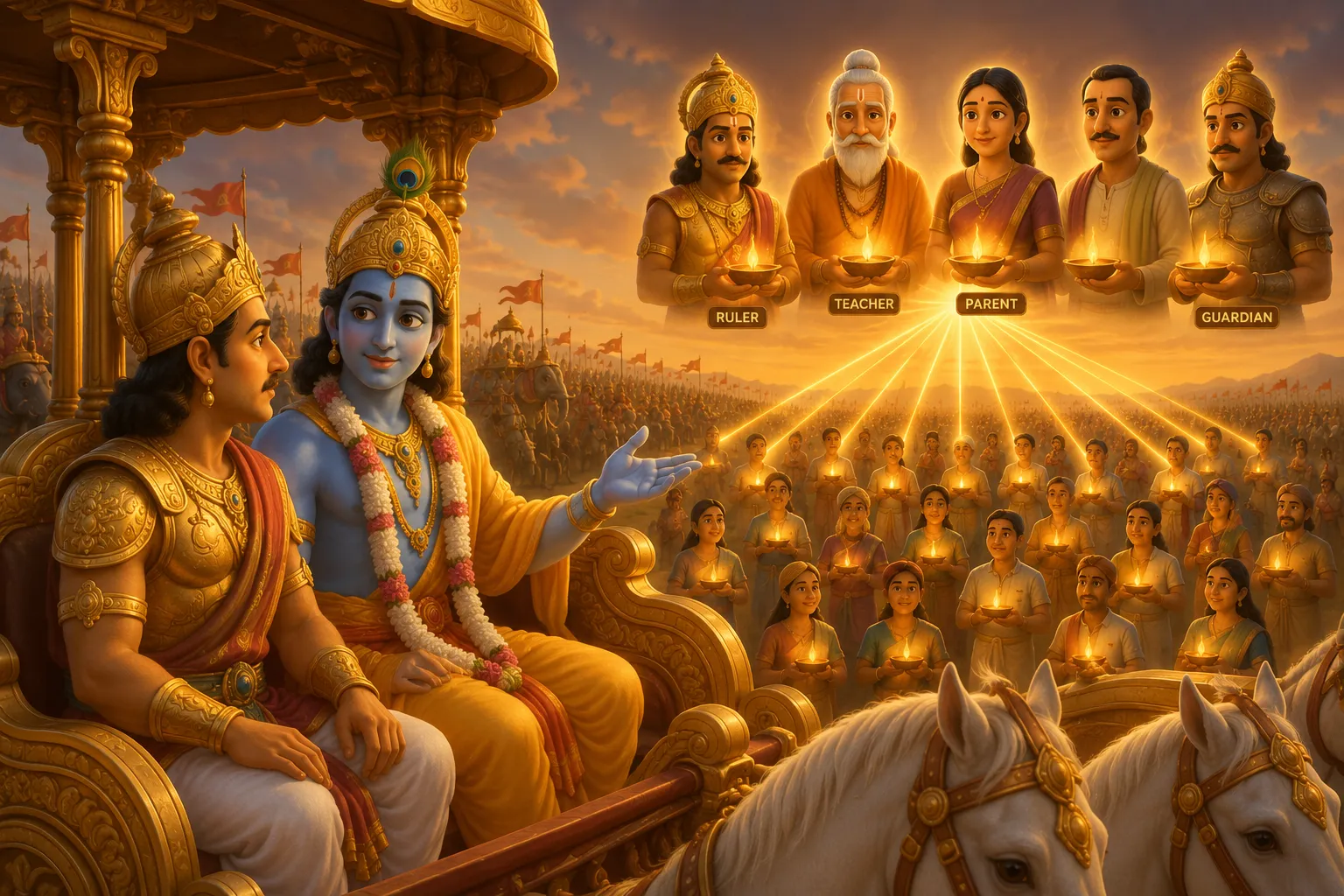
Bhagavān Kṛṣṇa continues the topic of lokasaṅgraha. In the previous shloka, he told Arjuna to act for the welfare and guidance of society. Now he explains why the action of a great or influential person matters so much.
The word śreṣṭhaḥ means a superior, respected, admired, or influential person. This may be a ruler, parent, teacher, elder, guru, celebrity, leader, scholar, saint, or anyone whom others look up to. Such a person does not live privately in the ordinary sense. His or her conduct becomes a visible standard.
People learn not only from words but from example. A child watches parents more than lectures. Students watch teachers. Citizens watch rulers. Devotees watch spiritual leaders. Society watches famous people. If such people live with discipline, humility, service, truthfulness, and reverence, others are encouraged to live that way. If they live carelessly, others feel licensed to imitate that carelessness.
This is why Bhagavān tells Arjuna to be careful. Arjuna is not an unknown person. He is admired as a great warrior, a powerful archer, a noble prince, and an accomplished person. If he abandons his duty out of confusion, others may use his example to justify their own escape from responsibility. If Arjuna acts with dharma, courage, and detachment, his conduct becomes a blessing for society.
This teaching is especially important because people often imitate the wrong side of great personalities. If a sage becomes angry in one story, people may imitate the anger but not the tapas. If a powerful person has one weakness, people may imitate the weakness but not the greatness. Therefore respected people must be extra responsible, and followers must learn to imitate the right qualities.
The shloka teaches that leadership is not merely position. Leadership is responsibility through example. Every person who is watched by others has a duty to make conduct worthy of imitation.