Bhagavad Gita Chapter 15 Summary — Purushottama Yoga
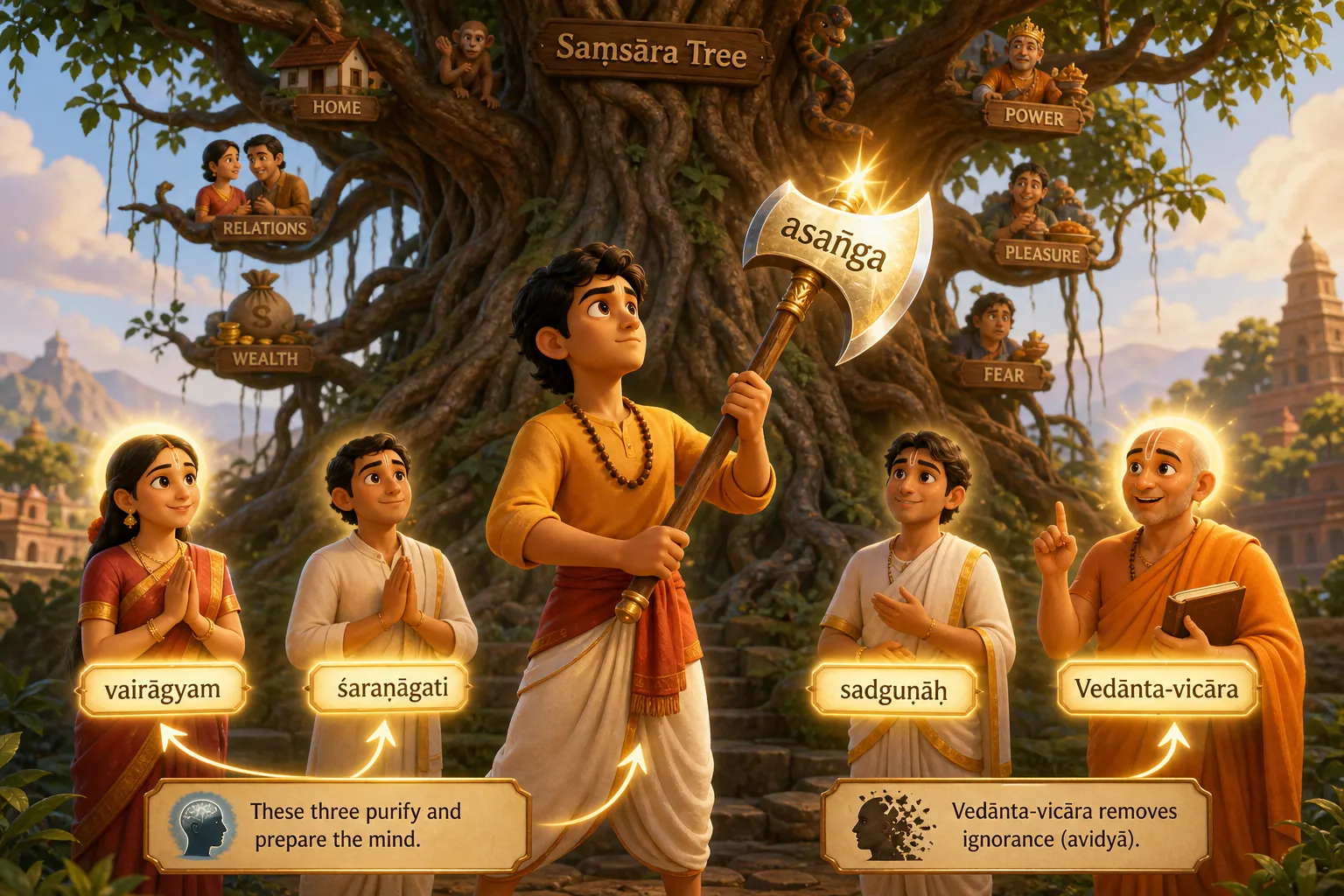
Krishna uses the metaphor of an eternal Ashvattha tree (with roots above and branches below) to describe the world. He explains the nature of the two Purushas (perishable and imperishable) and the Supreme Purushottama — from the Bhagavad Geeta.
Chapter 15 — Purushottama Yoga.
Chapter Placement in the Bhagavad Gītā
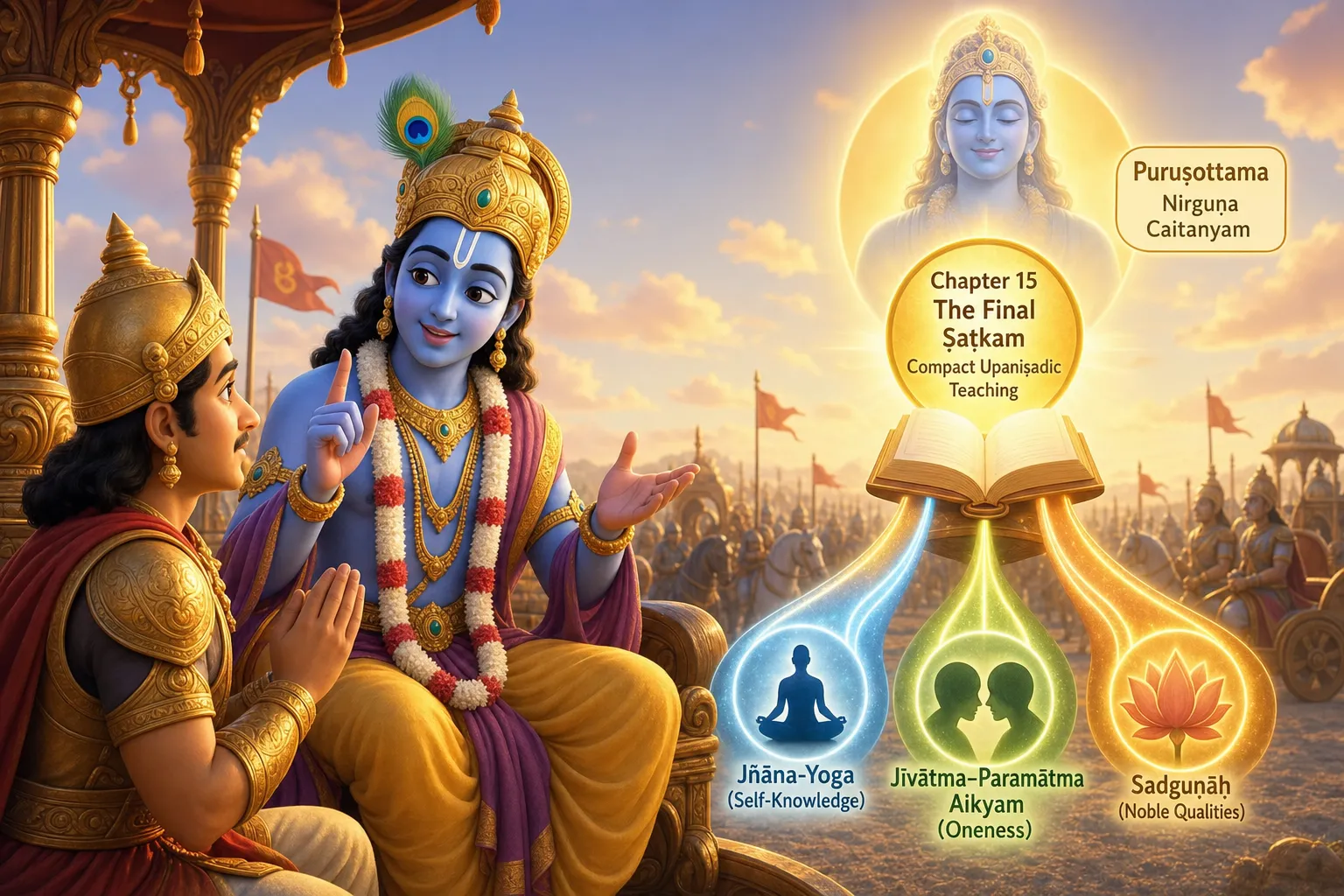
Chapter 15 belongs to the final ṣaṭkam of the Bhagavad Gītā. The final six chapters emphasize three major themes: jñāna-yoga as the direct sādhana, jīvātma-paramātma-aikyam as the central subject matter, and sadguṇāḥ or noble values as the necessary preparation for that knowledge. Chapter 15 contains all three themes in a compact and powerful form. It is short, popular for pārāyaṇam, and often chanted before food, but its real significance is that it is a deeply Vedāntic chapter presenting the essence of the Upaniṣads.
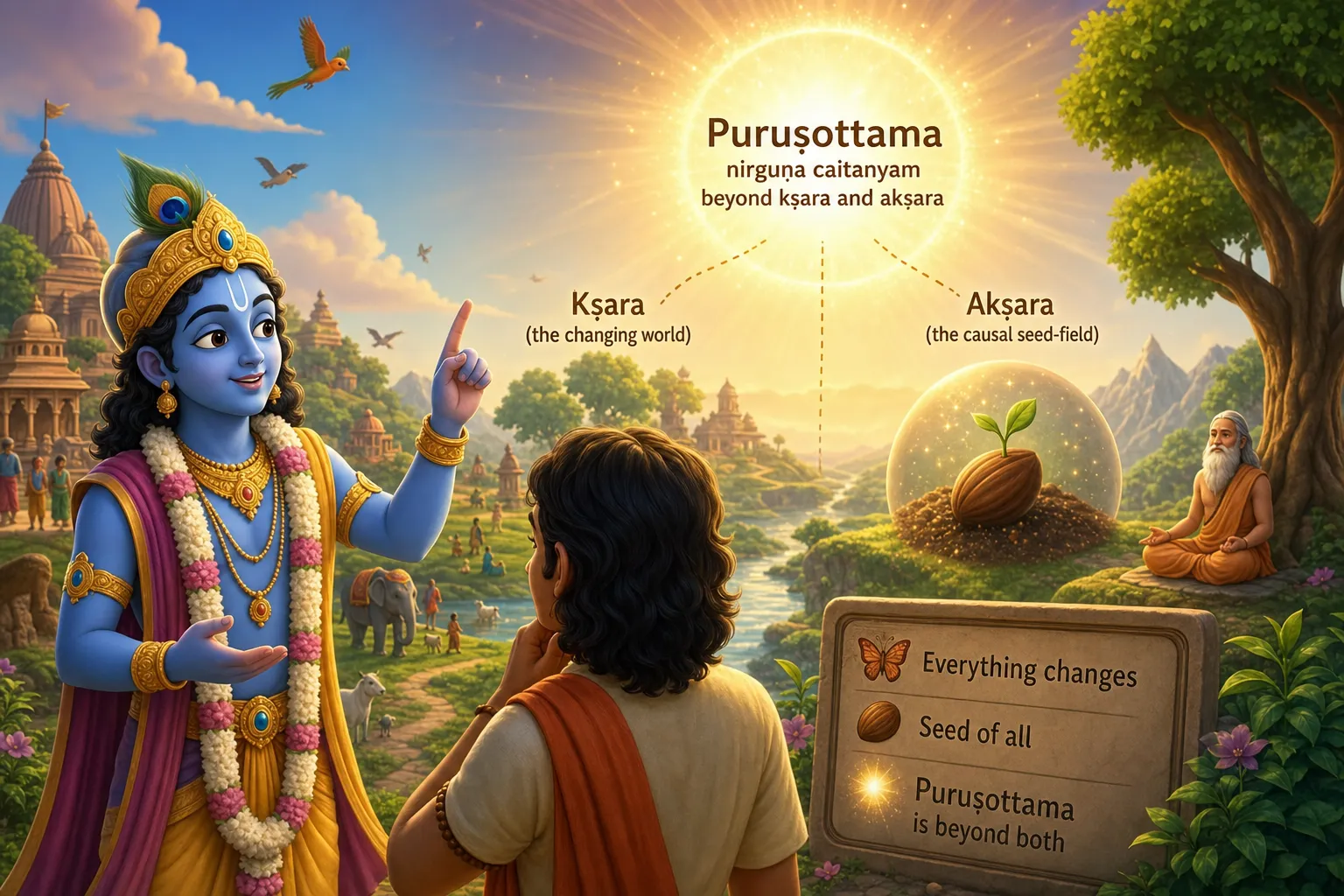
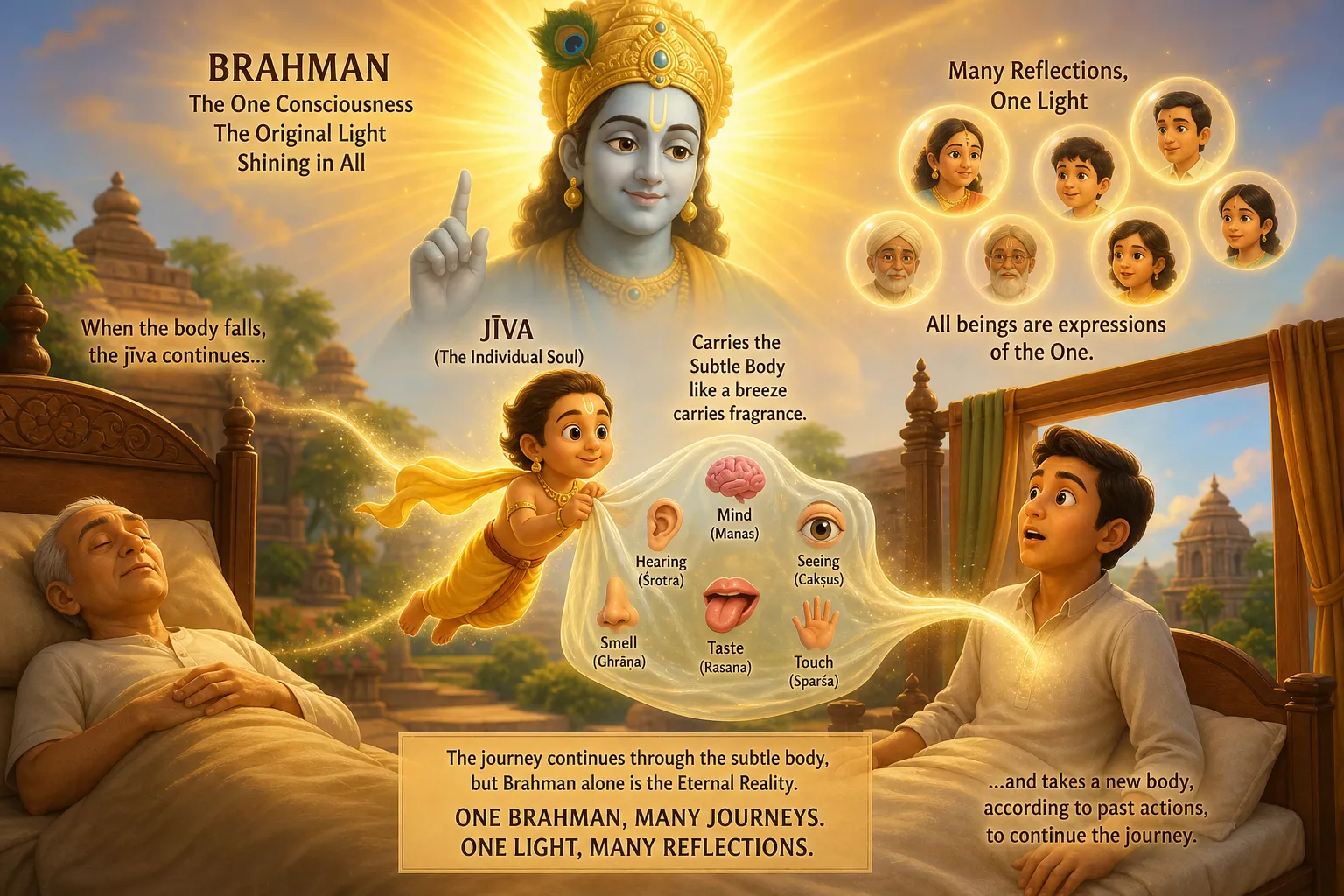
The title of the chapter is Puruṣottama-yoga. Here Puruṣottama does not primarily mean a particular saguṇa form such as Kṛṣṇa, Viṣṇu, Śiva, or any other deity-form. In this chapter, Puruṣottama means nirguṇa caitanyam, attributeless consciousness. The chapter’s main teaching is therefore not merely devotion to a form, but the knowledge of nirguṇa Brahman, the consciousness beyond both manifest and unmanifest matter.
Central Theme of the Chapter
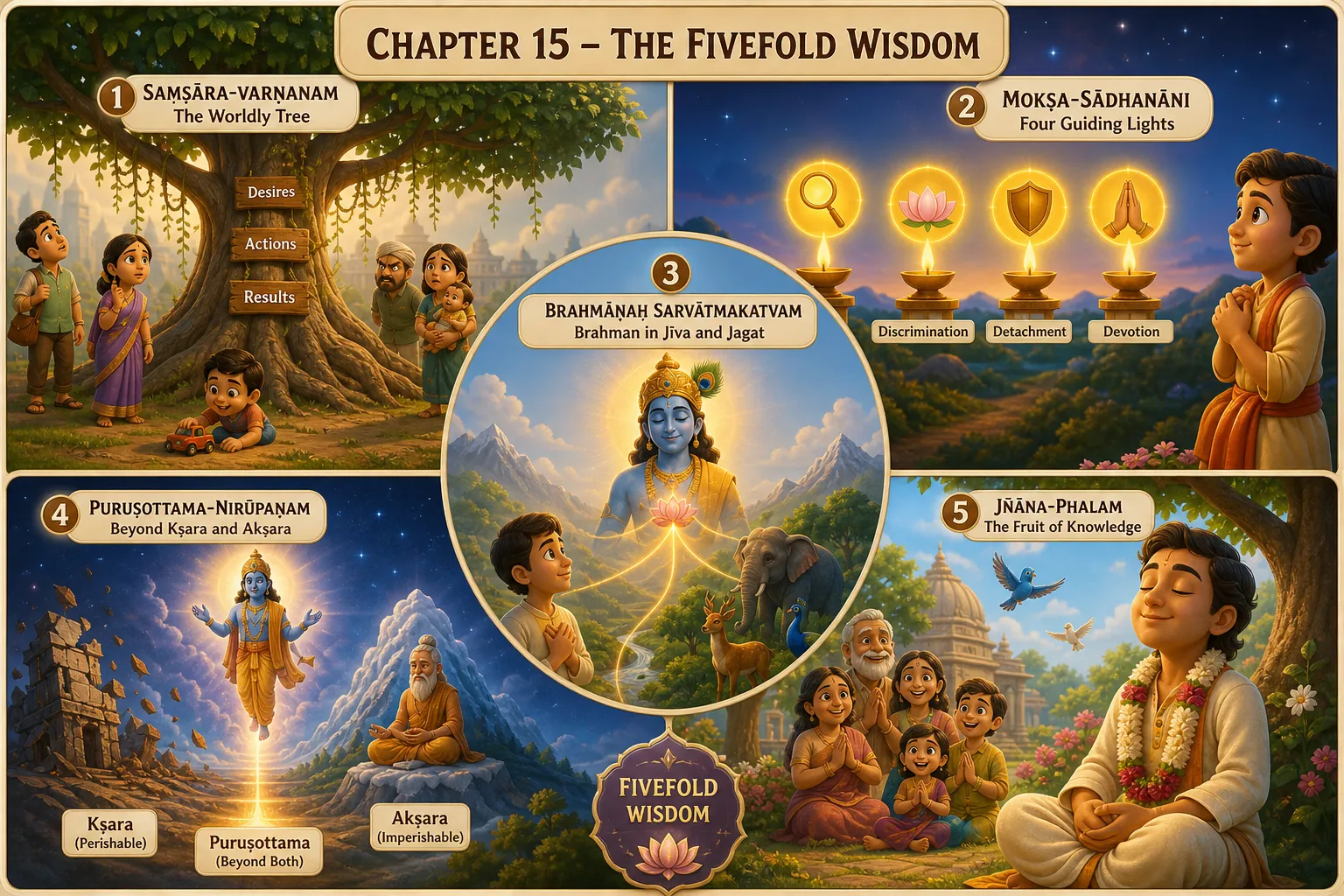
The central theme of Chapter 15 is: Brahma-jñānam alone gives mokṣa, and that Brahman is ultimately to be understood as Puruṣottama, the nirguṇa caitanyam that is beyond kṣara, the changing manifest universe, and superior even to akṣara, the unmanifest causal matter. The chapter begins by diagnosing the problem of saṃsāra, then gives the sādhana for freedom, then unfolds Brahman as all, and finally defines Puruṣottama as the highest truth.
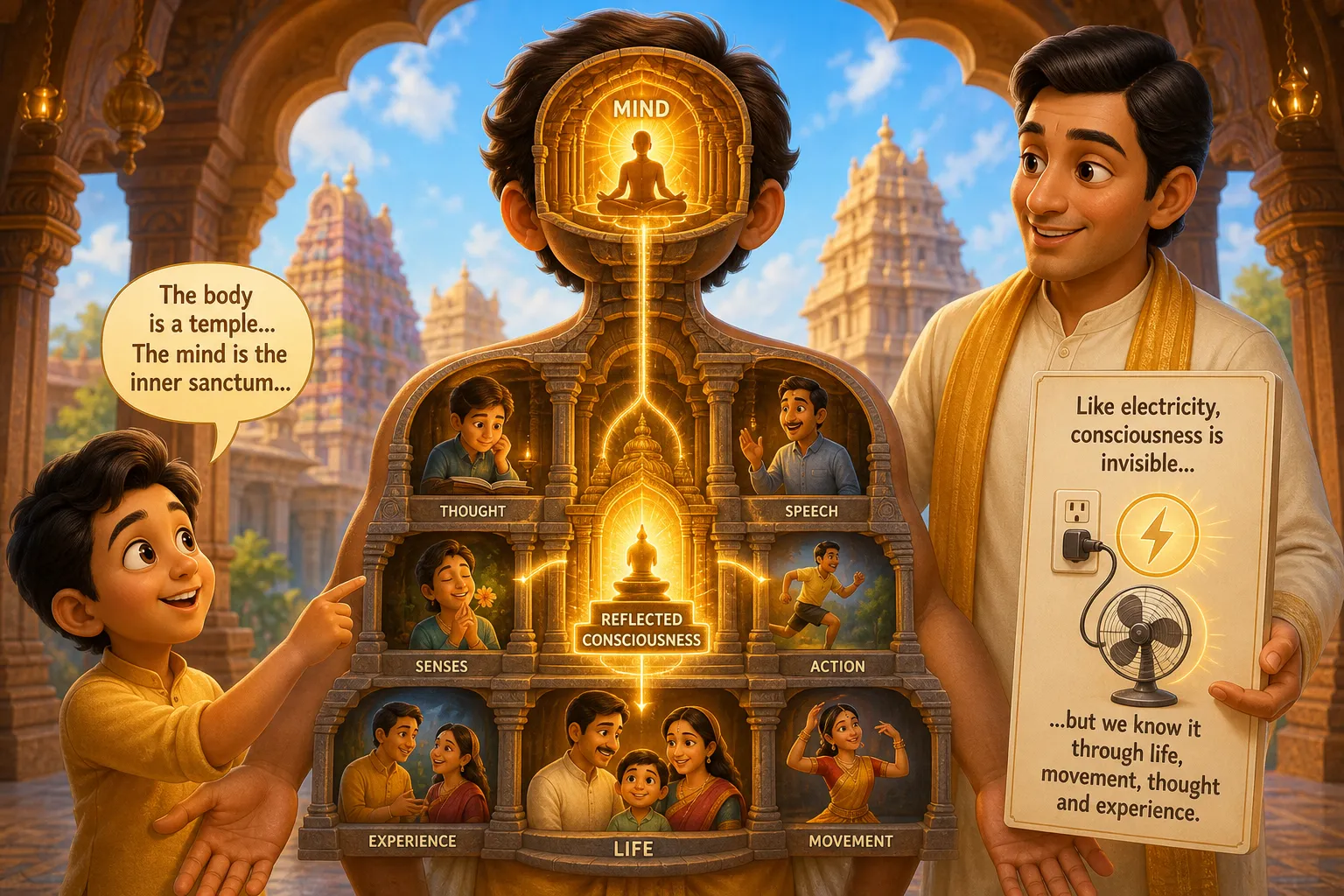
The chapter also teaches that Brahman is not somewhere outside the world. Brahman is the root of the saṃsāra tree, the destination of the seeker, the consciousness appearing as the jīva, the sustaining power appearing as the jagat, the witness in the heart, and finally the Puruṣottama beyond all material categories.
Major Confusion Removed by the Chapter
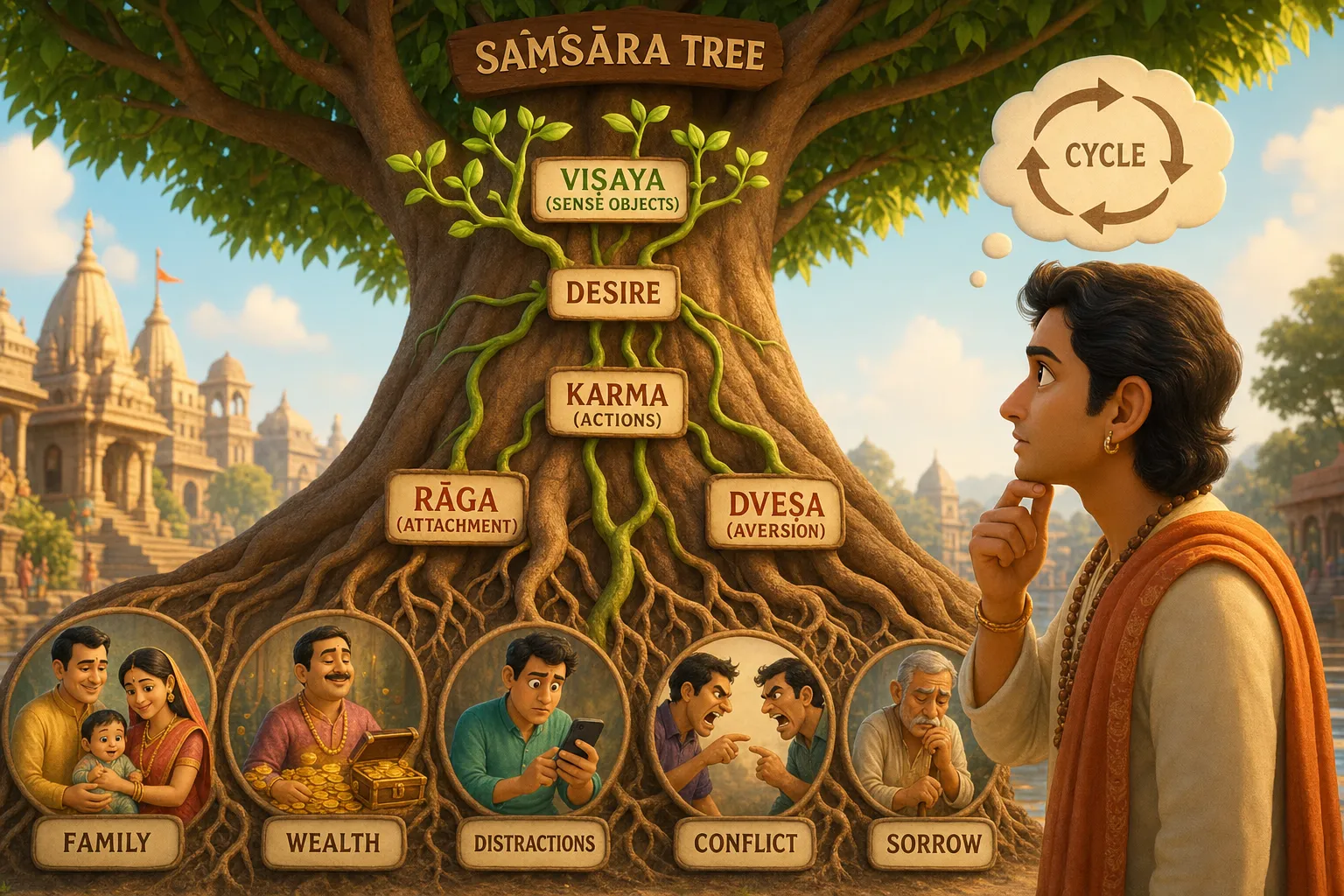
The first major confusion removed is the idea that saṃsāra is a manageable worldly inconvenience. Chapter 15 begins by making the seeker see saṃsāra-doṣa-darśanam — the recognition that worldly life, as long as it is governed by ignorance, desire, karma, and rebirth, is a continuing cycle of struggle. Unless one recognizes saṃsāra as a problem, one will not value mokṣa; unless one values mokṣa, one will not value Brahma-jñānam.
The second confusion removed is the idea that ritual, karma, or religious activity alone is the final solution. The karma-kāṇḍa of the Veda has value because it helps purify the mind, but if one remains permanently in ritual without moving to Vedānta-vicāra, the saṃsāra tree continues to be nourished. Karma-kāṇḍa is not to be rejected, but it must be used as preparation and then transcended through jñāna-kāṇḍa.
The third confusion removed is the tendency to mistake Puruṣottama for a limited form. Devotional forms are valid and sacred, but the final teaching of this chapter is that Puruṣottama is nirguṇa, nirvikāra, nirvikalpa, cētana Brahman. This protects the seeker from limiting Bhagavān to one body, one image, one location, or one saguṇa expression.
The fourth confusion removed is the idea that knowing Brahman means knowing many external details. Chapter 15 teaches that the one who knows Puruṣottama is sarvavit, not because he knows every empirical fact, but because he knows the essence of everything. Since Brahman alone is the truth of all names and forms, knowing Brahman is knowing the reality of all.