

श्रीभगवानुवाच ।
मय्यासक्तमनाः(फ्) पार्थ योगं(य्ँ) युञ्जन्मदाश्रयः ।
असंशयं समग्रं मां यथा ज्ञास्यसि तच्छृणु ॥७.१॥
śrībhagavānuvāca ।
mayyāsaktamanāḥ(f) pārtha yogaṃ(y) yuñjanmadāśrayaḥ ।
asaṃśayaṃ samagraṃ māṃ yathā jñāsyasi tacchṛṇu
Bhagavān tells Arjuna to listen to how, with the mind fixed on Him, practicing the required sādhana and taking refuge in Him, he will know Bhagavān completely and doubtlessly.
श्रीभगवान् śrībhagavān = Bhagavān, उवाच uvāca = said, मयि mayi = in me / with regard to me, आसक्तमनाः āsaktamanāḥ = one whose mind is attached, पार्थ pārtha = O Pārtha, योगम् yogam = yoga, युञ्जन् yuñjan = practicing / engaging in, मदाश्रयः madāśrayaḥ = taking refuge in me / having me as support, असंशयम् asaṃśayam = without doubt, समग्रम् samagram = completely / in full, माम् mām = me, यथा yathā = how / in what manner, ज्ञास्यसि jñāsyasi = you will know, तत् tat = that, शृणु śṛṇu = listen
Reflection
◈Is Bhagavān or mokṣa [liberation] my ultimate goal, or has an intermediate life goal quietly become my final destination?
◈What is one practice I can do regularly now to move closer to Bhagavān?

ज्ञानं(न्) तेऽहं सविज्ञानम् इदं(व्ँ) वक्ष्याम्यशेषतः ।
यज्ज्ञात्वा नेह भूयोऽन्यत्(ज्ञ्) ज्ञातव्यमवशिष्यते ॥७.२॥
jñānaṃ(n) te'haṃ savijñānam idaṃ(v) vakṣyāmyaśeṣataḥ ।
yajjñātvā neha bhūyo'nyat(jñ) jñātavyamavaśiṣyate
Bhagavān says that He will completely teach Arjuna both jñānam [theoretical knowledge - by which one understands Bhagavān using the forms and attributes, as explained in the scriptures] and vijñānam [experiential knowledge - by which, through one's own direct perception, one has the realization of Bhagavān as that absolute reality which transcends names and forms pervading the entire creation without a second], knowing which nothing more remains to be known.
Reflection
◈Am I only collecting more information, or am I seeking the knowledge that answers life’s deepest questions?
◈Do I relate to Bhagavān only through one picture or form, or am I ready to understand Bhagavān more deeply?

मनुष्याणां सहस्रेषु कश्चिद्यतति सिद्धये ।
यततामपि सिद्धानां(ङ्) कश्चिन्मां(व्ँ) वेत्ति तत्त्वतः ॥७.३॥
manuṣyāṇāṃ sahasreṣu kaścidyatati siddhaye ।
yatatāmapi siddhānāṃ(ṅ) kaścinmāṃ(v) vetti tattvataḥ
Among thousands of people, only a rare person strives for mokṣa, and even among striving seekers, only a rare one knows Bhagavān in reality.
Reflection
◈Am I mostly seeking comfort, success, and temporary relief, or have I begun to value inner freedom?
◈Do I keep postponing serious spiritual study until “life becomes settled”?

भूमिरापोऽनलो वायुः(ख्) खं मनो बुद्धिरेव च ।
अहङ्कार इतीयं मे भिन्ना प्रकृतिरष्टधा ॥७.४॥
bhūmirāpo'nalo vāyuḥ(kh) khaṃ mano buddhireva ca ।
ahaṅkāra itīyaṃ me bhinnā prakṛtiraṣṭadhā
Bhagavān begins revealing His nature by listing His eightfold aparā prakṛti [lower material nature]: earth, water, fire, air, space, mind, intellect, and ego-principle.
Reflection
◈Do I remember that the material world I use every day is also connected to Bhagavān?
◈When my thoughts and emotions change, do I mistake them for my real Self?

अपरेयमितस्त्वन्यां प्रकृतिं(व्ँ) विद्धि मे पराम् ।
जीवभूतां महाबाहो ययेदं(न्) धार्यते जगत् ॥७.५॥
apareyamitastvanyāṃ prakṛtiṃ(v) viddhi me parām ।
jīvabhūtāṃ mahābāho yayedaṃ(n) dhāryate jagat
Bhagavān tells Arjuna that beyond the lower material nature there is His higher nature, parā prakṛti [higher nature] — the conscious principle in the form of the jīva, by which this universe is sustained.
Reflection
◈Am I depending on something changing — body, money, relationship, role, or mood — for permanent security?
◈When my mind changes, can I notice that the change is being known by consciousness?

एतद्योनीनि भूतानि सर्वाणीत्युपधारय ।
अहं(ङ्) कृत्स्नस्य जगतः(फ्) प्रभवः(फ्) प्रलयस्तथा ॥७.६॥
etadyonīni bhūtāni sarvāṇītyupadhāraya ।
ahaṃ(ṅ) kṛtsnasya jagataḥ(f) prabhavaḥ(f) pralayastathā
Bhagavān tells Arjuna to understand that all beings are born from His two prakṛtis, and therefore He is the source and dissolution-ground of the entire universe.
Reflection
◈Do I still think of Bhagavān as separate from the world, or am I learning to see the world as Bhagavān’s manifestation?
◈When I look at my body and mind, do I remember that both belong to Bhagavān’s order and are not independently “mine”?

मत्तः(फ्) परतरं(न्) नान्यत् किञ्चिदस्ति धनञ्जय ।
मयि सर्वमिदं प्रोतं सूत्रे मणिगणा इव ॥७.७॥
mattaḥ(f) parataraṃ(n) nānyat kiñcidasti dhanañjaya ।
mayi sarvamidaṃ protaṃ sūtre maṇigaṇā iva
Bhagavān tells Arjuna that there is no cause higher than Him, and that the whole universe is strung in Him like beads on a thread. Just as in a fully embroidered sārī—where the thread and beads used for the embroidery are no different from the thread of the sārī itself—the entire universe is no different from Bhagavān.
Reflection
◈In daily life, do I notice only the visible “beads,” or do I remember the invisible support of Bhagavān?
◈What do I strongly call “mine,” and can I see it as entrusted to me within Bhagavān’s order?

रसोऽहमप्सु कौन्तेय प्रभास्मि शशिसूर्ययोः ।
प्रणवः(स्) सर्ववेदेषु शब्दः(ख्) खे पौरुषं(न्) नृषु ॥७.८॥
raso'hamapsu kaunteya prabhāsmi śaśisūryayoḥ ।
praṇavaḥ(s) sarvavedeṣu śabdaḥ(kh) khe pauruṣaṃ(n) nṛṣu
Bhagavān tells Arjuna that He is the taste in water, the radiance in the moon and sun, Oṃkāra in all the Vedas, sound in space, and the essential pauruṣa (पौरुष) - [meaning valor/courage] in human beings.
Reflection
◈When I drink water, see light, or hear sound, do I remember Bhagavān even for a moment?
◈When I notice intelligence, courage, or dignity in myself or others, do I see it as Bhagavān’s manifestation or as ego’s private possession?

पुण्यो गन्धः(फ्) पृथिव्यां(ञ्) च तेजश्चास्मि विभावसौ ।
जीवनं सर्वभूतेषु तपश्चास्मि तपस्विषु ॥७.९॥
puṇyo gandhaḥ(f) pṛthivyāṃ(ṅ) ca tejaścāsmi vibhāvasau ।
jīvanaṃ sarvabhūteṣu tapaścāsmi tapasviṣu
Bhagavān tells Arjuna that He is the pure fragrance in earth, the heat in fire, the life in all beings, and the austerity in tapasvīs.
Reflection
◈When I experience earth, fire, or living beings, do I notice Bhagavān’s presence in their essential nature?
◈Do I treat life in all beings with reverence, or do I see only outer form and usefulness?

बीजं मां सर्वभूतानां(व्ँ) विद्धि पार्थ सनातनम् ।
बुद्धिर्बुद्धिमतामस्मि तेजस्तेजस्विनामहम् ॥७.१०॥
bījaṃ māṃ sarvabhūtānāṃ(v) viddhi pārtha sanātanam ।
buddhirbuddhimatāmasmi tejastejasvināmaham
Bhagavān tells Arjuna to know Him as the eternal seed of all beings, the intelligence in the intelligent, and the boldness in the bold.
Reflection
◈When I notice intelligence or talent in myself, do I feel gratitude or ego?
◈When I see intelligence, courage, or success in someone else, do I feel appreciation or jealousy?

बलं बलवतां(ञ्) चाहं(ङ्) कामरागविवर्जितम् ।
धर्माविरुद्धो भूतेषु कामोऽस्मि भरतर्षभ ॥७.११॥
balaṃ balavatāṃ(ñ) cāhaṃ(ṅ) kāmarāgavivarjitam ।
dharmāviruddho bhūteṣu kāmo'smi bharatarṣabha
Bhagavān tells Arjuna that He is the pure strength in the strong, free from selfish desire and attachment, and He is the noble desire in beings that does not oppose dharma.
Reflection
◈What strength do I have — knowledge, speech, money, influence, physical energy, skill, or discipline — and am I using it for dharma or ego?
◈Is there a desire in me that is pulling me downward, becoming selfish, or making me ignore what is right?

ये चैव सात्त्विका भावा(:) राजसास्तामसाश्च ये ।
मत्त एवेति तान्विद्धि न त्वहं(न्) तेषु ते मयि ॥७.१२॥
ye caiva sāttvikā bhāvā(ḥ) rājasāstāmasāśca ye ।
matta eveti tān viddhi na tvahaṃ(n) teṣu te mayi
Bhagavān tells Arjuna that all sāttvika, rājasika, and tāmasika states of mind arise from His aparā prakṛti and depend upon Him, while He remains independent of them.
Reflection
◈Which type of thought has been dominating my mind recently — clear and noble, restless and driven, or dull and confused?
◈When an unhealthy thought arises, do I excuse it, feed it, or use my buddhi to redirect it?

त्रिभिर्गुणमयैर्भावैः(र्) एभिः(स्) सर्वमिदं(ञ्) जगत् ।
मोहितं(न्) नाभिजानाति मामेभ्यः(फ्) परमव्ययम् ॥७.१३॥
tribhirguṇamayairbhāvaiḥ(r) ebhiḥ(s) sarvamidaṃ(ñ) jagat ।
mohitaṃ(n) nābhijānāti māmebhyaḥ(f) paramavyayam
Deluded by the changing states produced by the three guṇas, humanity fails to recognize Bhagavān’s higher nature — parā prakṛti, which is beyond them and changeless.
Reflection
◈What changing thing am I currently expecting to finally make me feel completely secure or fulfilled?
◈Can I value that person, goal, possession, or experience without demanding permanence from it?

दैवी ह्येषा गुणमयी मम माया दुरत्यया ।
मामेव ये प्रपद्यन्ते मायामेतां(न्) तरन्ति ते ॥७.१४॥
daivī hyeṣā guṇamayī mama māyā duratyayā ।
māmeva ye prapadyante māyāmetāṃ(n) taranti te
Bhagavān says that His divine māyā, made of the three guṇas, is extremely difficult to cross, but those who humbly take refuge in Him cross over it.
Reflection
◈In what area of my life am I quietly thinking, “I can control this completely; I do not need any deeper support”?
◈When I pray, am I only asking Bhagavān to rearrange aparā prakṛti for me, or am I also asking for clarity, guidance, spiritual growth, and knowledge?

न मां(न्) दुष्कृतिनो मूढाः प्रपद्यन्ते नराधमाः ।
माययापहृतज्ञाना(:) आसुरं भावमाश्रिताः ॥७.१५॥
na māṃ(n) duṣkṛtino mūḍhāḥ prapadyante narādhamāḥ ।
māyayāpahṛtajñānā(ḥ) āsuraṃ bhāvamāśritāḥ
Those deluded by māyā, whose discrimination is obscured and whose lives become dominated by adhārmic tendencies, fail to take refuge in Bhagavān.
Reflection
◈If I look at how I actually spend my time and attention, are artha and kāma crowding out dharma, spiritual study, and the pursuit of mokṣa?
◈Is there any area where I already know something is changing or insecure but still behave as though it must remain permanently under my control?

चतुर्विधा भजन्ते मां(ञ्) जनाः(स्) सुकृतिनोऽर्जुन ।
आर्तो जिज्ञासुरर्थार्थी ज्ञानी च भरतर्षभ ॥७.१६॥
caturvidhā bhajante māṃ(ñ) janāḥ(s) sukṛtino'rjuna ।
ārto jijñāsurarthārthī jñānī ca bharatarṣabha
O Arjuna, four kinds of virtuous devotees worship Me — the distressed, the seeker of worldly gains, the seeker of knowledge, and the wise one who has discovered Bhagavān.
Reflection
◈When do I remember Bhagavān most strongly — mainly when I am in difficulty, when I want something, or because I genuinely want to know Bhagavān?
◈If all my current worldly problems disappeared tomorrow, would my interest in prayer, Gītā, guru, and śāstra continue?

तेषां(ञ्) ज्ञानी नित्ययुक्तः(क्त) एकभक्तिर्विशिष्यते ।
प्रियो हि ज्ञानिनोऽत्यर्थम् अहं स च मम प्रियः ॥७.१७॥
teṣāṃ(ñ) jñānī nityayuktaḥ(kta) ekabhaktirviśiṣyate ।
priyo hi jñānino'tyarthamahaṃ sa ca mama priyaḥ
Among the four devotees, the jñānī excels because he is ever united with Bhagavān through non-dual devotion; Bhagavān is supremely dear to him, and he is supremely dear to Bhagavān.
Reflection
◈Does my sense of closeness to Bhagavān depend mainly on whether my mind feels devotional or whether life is going the way I want?
◈When a prayer is not answered as I hoped, does my trust in Bhagavān weaken?

उदाराः(स्) सर्व एवैते ज्ञानी त्वात्मैव मे मतम् ।
आस्थितः(स्) स हि युक्तात्मा मामेवानुत्तमां(ङ्) गतिम् ॥७.१८॥
udārāḥ(s) sarva evaite jñānī tvātmaiva me matam ।
āsthitaḥ(s) sa hi yuktātmā māmevānuttamāṃ(ṅ) gatim
All four devotees are noble, but the jñānī is Bhagavān’s very Self because, with an integrated and committed mind, he has recognized Bhagavān alone as the highest goal.
Reflection
◈Which current goal in my life am I treating as though achieving it will finally make me completely secure or fulfilled?
◈Has my relationship with Bhagavān remained mostly “Please give me” and “Please remove this,” or is it growing toward “I want to know You”?

बहूनां(ञ्) जन्मनामन्ते ज्ञानवान्मां प्रपद्यते ।
वासुदेवः(स्) सर्वमिति स महात्मा सुदुर्लभः ॥७.१९॥
bahūnāṃ(ñ) janmanāmante jñānavānmāṃ prapadyate ।
vāsudevaḥ(s) sarvamiti sa mahātmā sudurlabhaḥ
After a long spiritual journey extending through many births, the mature seeker gains knowledge, recognizes Vāsudeva as the existence-consciousness reality of everything, and discovers non-separation from Bhagavān; such a mahātmā is extremely rare.
Reflection
◈Has my bhakti genuinely grown over time, or am I still relating to Bhagavān mainly as a means for solving the same kinds of worldly problems?
◈When spiritual progress feels slow, do I become discouraged, or can I continue the proper sādhana without demanding immediate transformation?

कामैस्तैस्तैर्हृतज्ञानाः(फ्) प्रपद्यन्तेऽन्यदेवताः ।
तं(न्) तं(न्) नियममास्थाय प्रकृत्या नियताः(स्) स्वया ॥७.२०॥
kāmaistaistairhṛtajñānāḥ(f) prapadyante'nyadevatāḥ ।
taṃ(n) taṃ(n) niyamamāsthāya prakṛtyā niyatāḥ(s) svayā
Driven by various finite desires that blunt discrimination, people seek particular deities for particular results, carefully following the corresponding disciplines of worship according to their own likes and dislikes.
Reflection
◈What is one result I currently feel, “I absolutely must get this,” and am I expecting more from it than a finite result can actually provide?
◈Do my strongest desires make me more disciplined than my desire for spiritual growth?
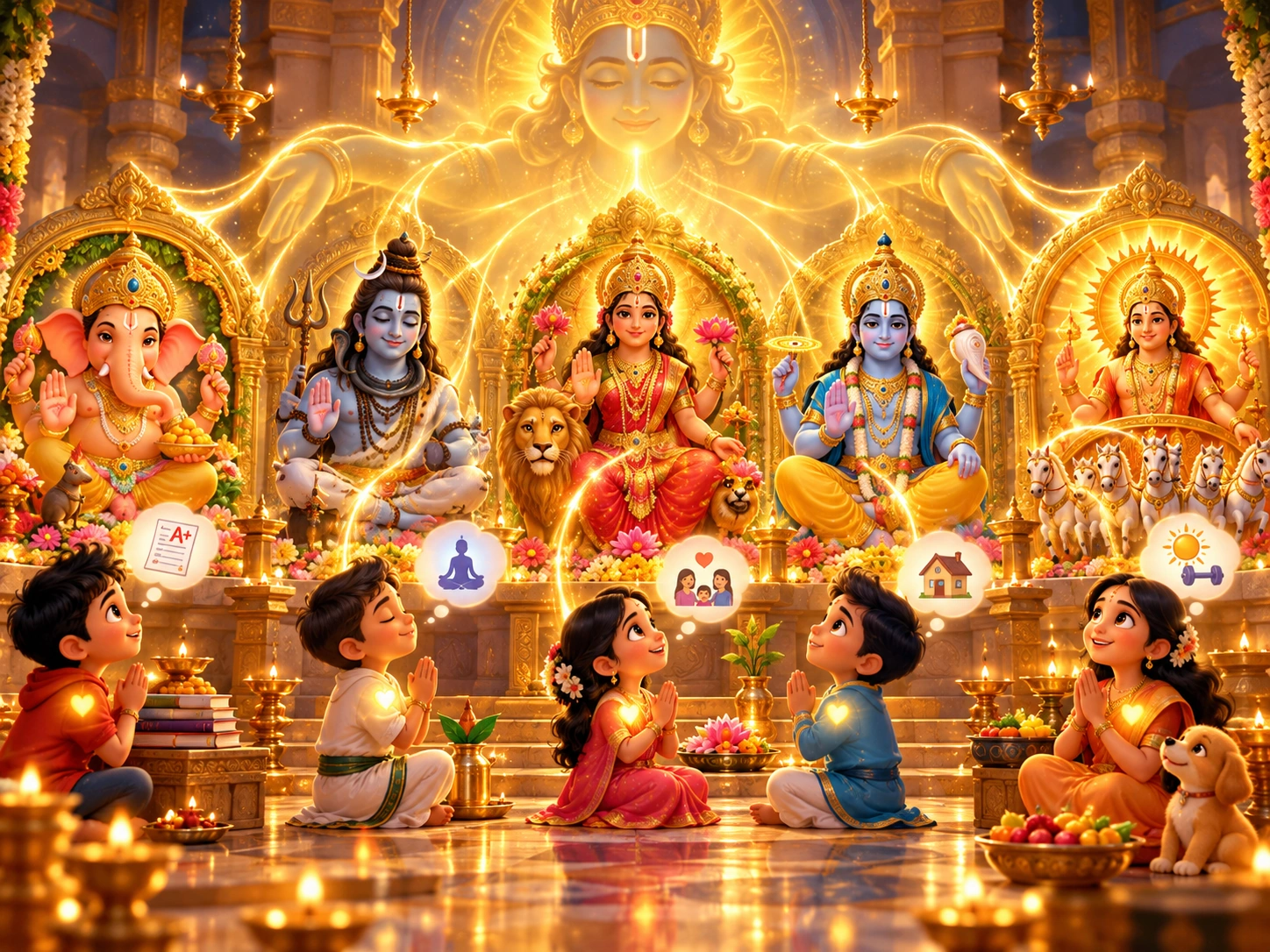
यो यो यां(य्ँ) यां(न्) तनुं भक्तः(श्) श्रद्धयार्चितुमिच्छति ।
तस्य तस्याचलां श्रद्धां(न्) तामेव विदधाम्यहम् ॥७.२१॥
yo yo yāṃ(y) yāṃ(n) tanuṃ bhaktaḥ(ś) śraddhayārcitumicchati ।
tasya tasyācalāṃ śraddhāṃ(n) tāmeva vidadhāmyaham
Whichever sacred form a devotee chooses to worship with faith, Bhagavān strengthens that very faith and allows the devotee’s devotion to become firm.
Reflection
◈Is there a past experience in which prayer strengthened my trust in Bhagavān? What did I do with that stronger faith afterward?
◈Do I respect another person’s chosen deity-form, or do I assume that my own devotional form must be superior?

स तया श्रद्धया युक्तः(स्) तस्याराधनमीहते ।
लभते च ततः(ख्) कामान् मयैव विहितान् हि तान् ॥७.२२॥
sa tayā śraddhayā yuktaḥ(s) tasyārādhanamīhate ।
labhate ca tataḥ(kh) kāmān mayaiva vihitān hi tān
Established in that faith, the devotee worships the chosen form and obtains the desired results, but those results are ultimately sanctioned by the one infinite Bhagavān alone.
Reflection
◈When something I prayed for succeeds, do I recognize both my effort and the larger divine order—or do I claim the entire result as my own?
◈Have I ever taken a personal experience with one deity-form and turned it into a judgment about someone else’s form of worship?

अन्तवत्तु फलं(न्) तेषां(न्) तद्भवत्यल्पमेधसाम् ।
देवान्देवयजो यान्ति मद्भक्ता यान्ति मामपि ॥७.२३॥
antavattu phalaṃ(n) teṣāṃ(n) tadbhavatyalpamedhasām ।
devāndevayajo yānti madbhaktā yānti māmapi
The results of desire-driven worship come to an end. Those who seek a finite goal reach a finite goal; those who seek Bhagavān reach Bhagavān.
Reflection
◈What is one finite goal I once believed would finally satisfy me, and what new desire appeared after I obtained it?
◈Which current possession, role, relationship, or status has become something I fear losing because I have begun depending on it for my sense of wellbeing?

अव्यक्तं(व्ँ) व्यक्तिमापन्नं मन्यन्ते मामबुद्धयः ।
परं भावमजानन्तः(तो) ममाव्ययमनुत्तमम् ॥७.२४॥
avyaktaṃ(v) vyaktimāpannaṃ manyante māmabuddhayaḥ ।
paraṃ bhāvamajānantaḥ(to) mamāvyayamanuttamam
Those who do not know Bhagavān’s higher nature think He is only the form that appears and disappears. That higher nature is changeless consciousness, always present.
Reflection
◈Do I unconsciously think Bhagavān is more present when I have a powerful devotional experience and less present when my mind feels ordinary or distracted?
◈When a thought, emotion, sound, or experience disappears, what is present to know that it has disappeared?

नाहं प्रकाशः(स्) सर्वस्य योगमायासमावृतः ।
मूढोऽयं(न्) नाभिजानाति लोको मामजमव्ययम् ॥७.२५॥
nāhaṃ prakāśaḥ(s) sarvasya yogamāyāsamāvṛtaḥ ।
mūḍho'yaṃ(n) nābhijānāti loko māmajamavyayam
Veiled by the attractive three-guṇa māyā, Bhagavān’s higher nature is not evident to everyone; the deluded world therefore fails to recognize Him as the birthless, changeless consciousness.
Reflection
◈What occupies most of my mental attention each day, and how much space do I actually give to the deeper spiritual pursuit?
◈Which changing object, relationship, achievement, or condition am I currently expecting to give me a level of permanent security or fulfilment that it cannot provide?

वेदाहं समतीतानि वर्तमानानि चार्जुन ।
भविष्याणि च भूतानि मां(न्) तु वेद न कश्चन ॥७.२६॥
vedāhaṃ samatītāni vartamānāni cārjuna ।
bhaviṣyāṇi ca bhūtāni māṃ(n) tu veda na kaścana
Bhagavān, being the master rather than the victim of māyā, knows all beings of the past, present, and future, while the māyā-bound jīva fails to recognize Bhagavān’s true higher nature.
Reflection
◈Where in my life am I currently treating an assumption about another person or the future as though it were a known fact?
◈When plans change unexpectedly, can I distinguish “I do not understand the whole situation” from “the situation must therefore be bad”?
इच्छाद्वेषसमुत्थेन द्वन्द्वमोहेन भारत ।
सर्वभूतानि सम्मोहं सर्गे यान्ति परन्तप ॥७.२७॥
icchādveṣasamutthena dvandvamohena bhārata ।
sarvabhūtāni sammohaṃ sarge yānti parantapa
From birth itself, beings fall into delusion by dividing the world through desire and aversion into “what will make me happy” and “what will make me unhappy.”
Reflection
◈What is one thing I currently tell myself I must obtain in order to be happy?
◈What person, event, or situation have I labelled as the cause of my unhappiness, and how much of that reaction comes from my own expectation or aversion?
येषां(न्) त्वन्तगतं पापं(ञ्) जनानां पुण्यकर्मणाम् ।
ते द्वन्द्वमोहनिर्मुक्ता(क्ताः) भजन्ते मां(न्) दृढव्रताः ॥७.२८॥
yeṣāṃ(n) tvantagataṃ pāpaṃ(ñ) janānāṃ puṇyakarmaṇām ।
te dvandvamohanirmuktā(ktāḥ) bhajante māṃ(n) dṛḍhavratāḥ
Those whose minds have been purified through noble actions become free from the delusion of desire and aversion and firmly turn toward Bhagavān as the infinite goal.
Reflection
◈What repeated worldly pursuit have I begun to recognize as incapable of giving the lasting peace I once expected from it?
◈Which selfless or dhārmic actions in my life genuinely make me less self-centered, more grateful, and more capable of clear thinking?
जरामरणमोक्षाय मामाश्रित्य यतन्ति ये ।
ते ब्रह्म तद्विदुः(ख्) कृत्स्नम् अध्यात्मं(ङ्) कर्म चाखिलम् ॥७.२९॥
jarāmaraṇamokṣāya māmāśritya yatanti ye ।
te brahma tadviduḥ(kh) kṛtsnam adhyātmaṃ(ṅ) karma cākhilam
Those who take refuge in Bhagavān and strive to become free from old age and death seek what is beyond time and ultimately come to complete knowledge of Bhagavān, including Brahman, adhyātma, and karma.
Reflection
◈Which aspect of aging, dependence, change, or death do I find most difficult to accept, and what does that reveal about what I currently take myself to be?
◈Is most of my effort directed only toward making life within time more secure, or do I also make room for discovering what is beyond time?
साधिभूताधिदैवं मां साधियज्ञं(ञ्) च ये विदुः ।
प्रयाणकालेऽपि च मां(न्) ते विदुर्युक्तचेतसः ॥७.३०॥
sādhibhūtādhidaivaṃ māṃ sādhiyajñaṃ(ñ) ca ye viduḥ ।
prayāṇakāle'pi ca māṃ(n) te viduryuktacetasaḥ
Those disciplined niṣkāma-bhaktas who know Bhagavān completely through all six factors remember Him even at the time of death.
Reflection
◈When I am suddenly frightened, disappointed, or under pressure, what does my mind automatically run toward?
◈Is remembrance of Bhagavān a regular part of my life, or am I unconsciously assuming that spiritual focus will appear automatically when I most need it?