Bhagavad Gita Chapter 7 Summary — Jnana Vijnana Yoga
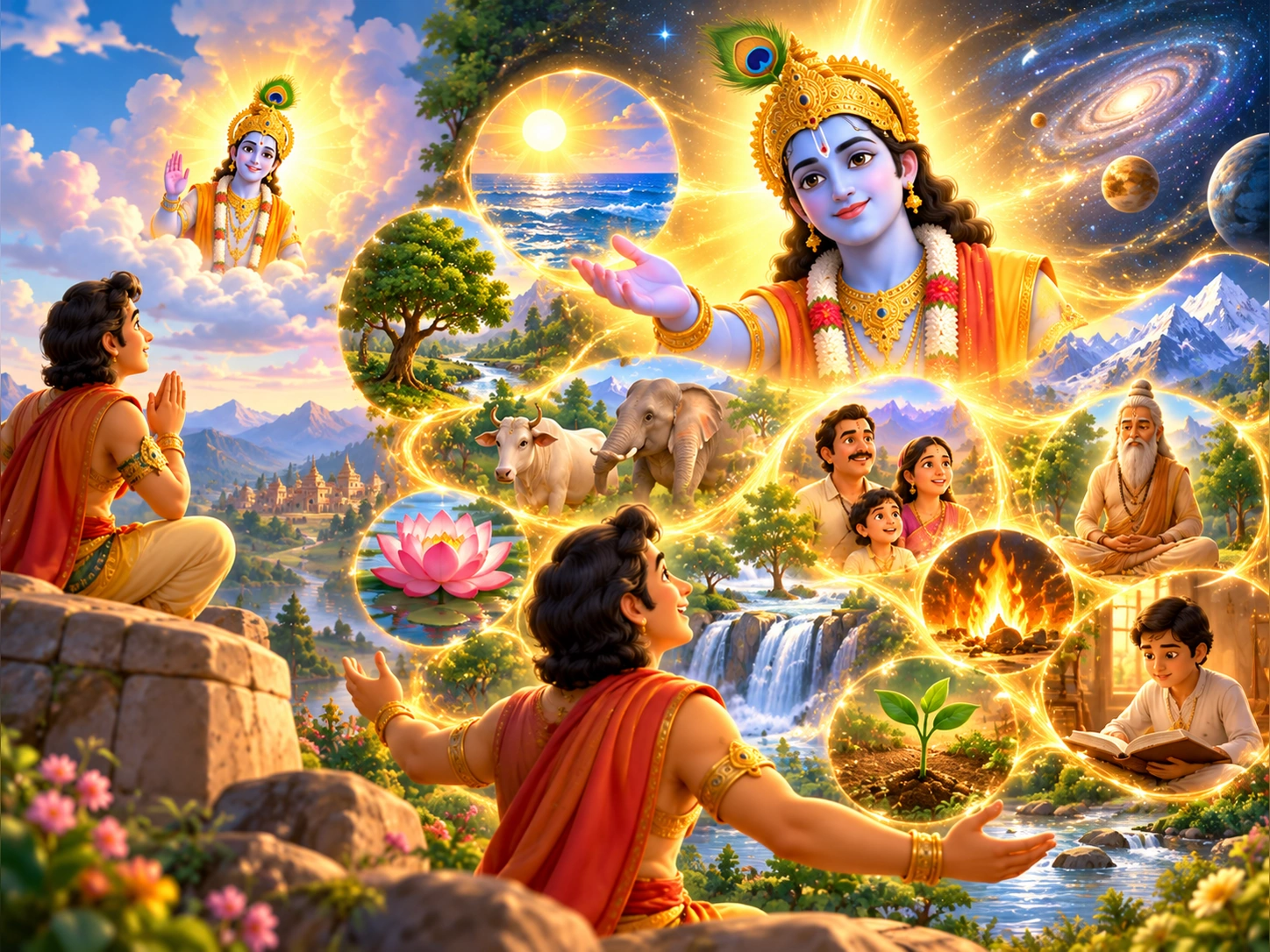
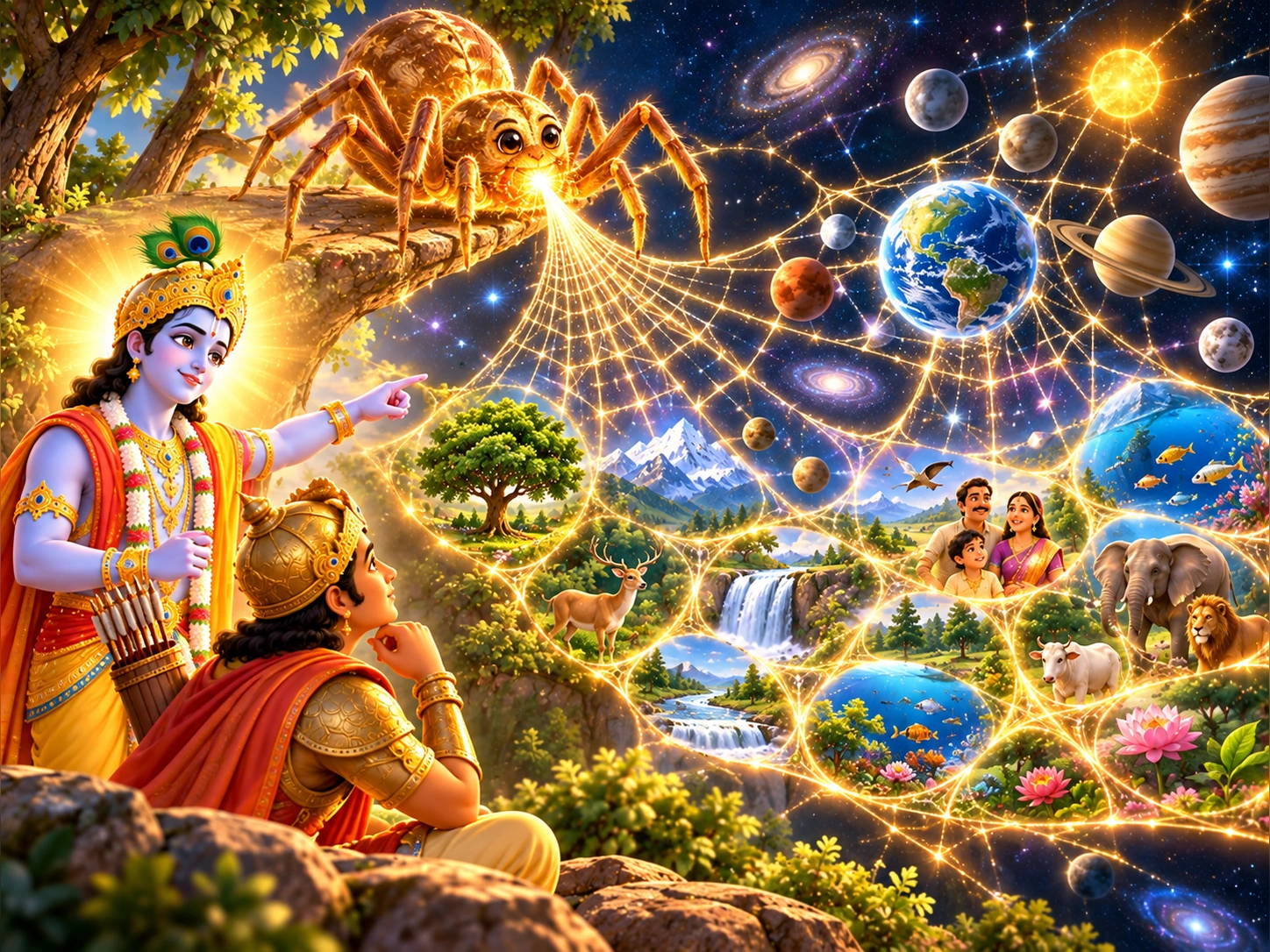
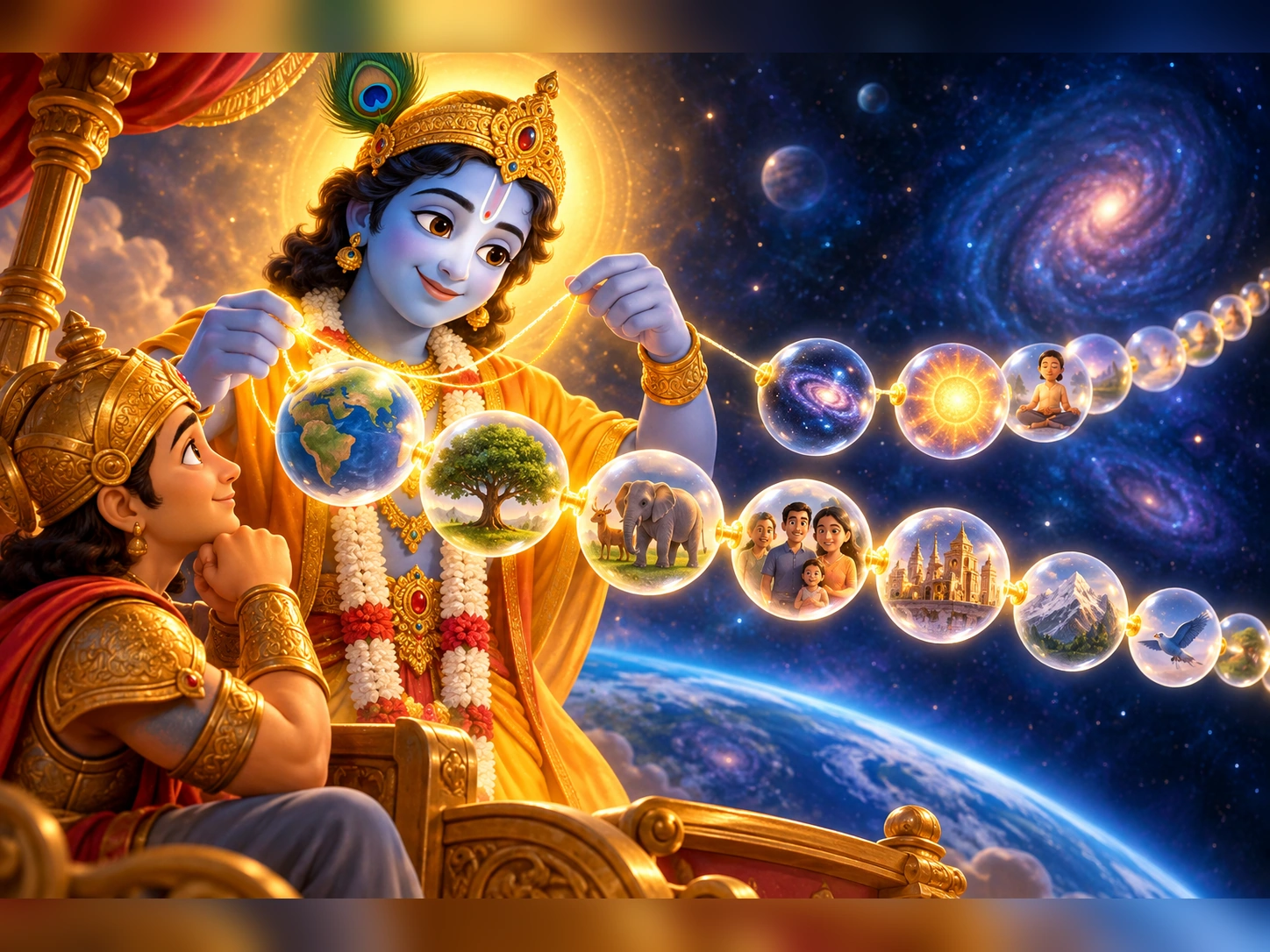
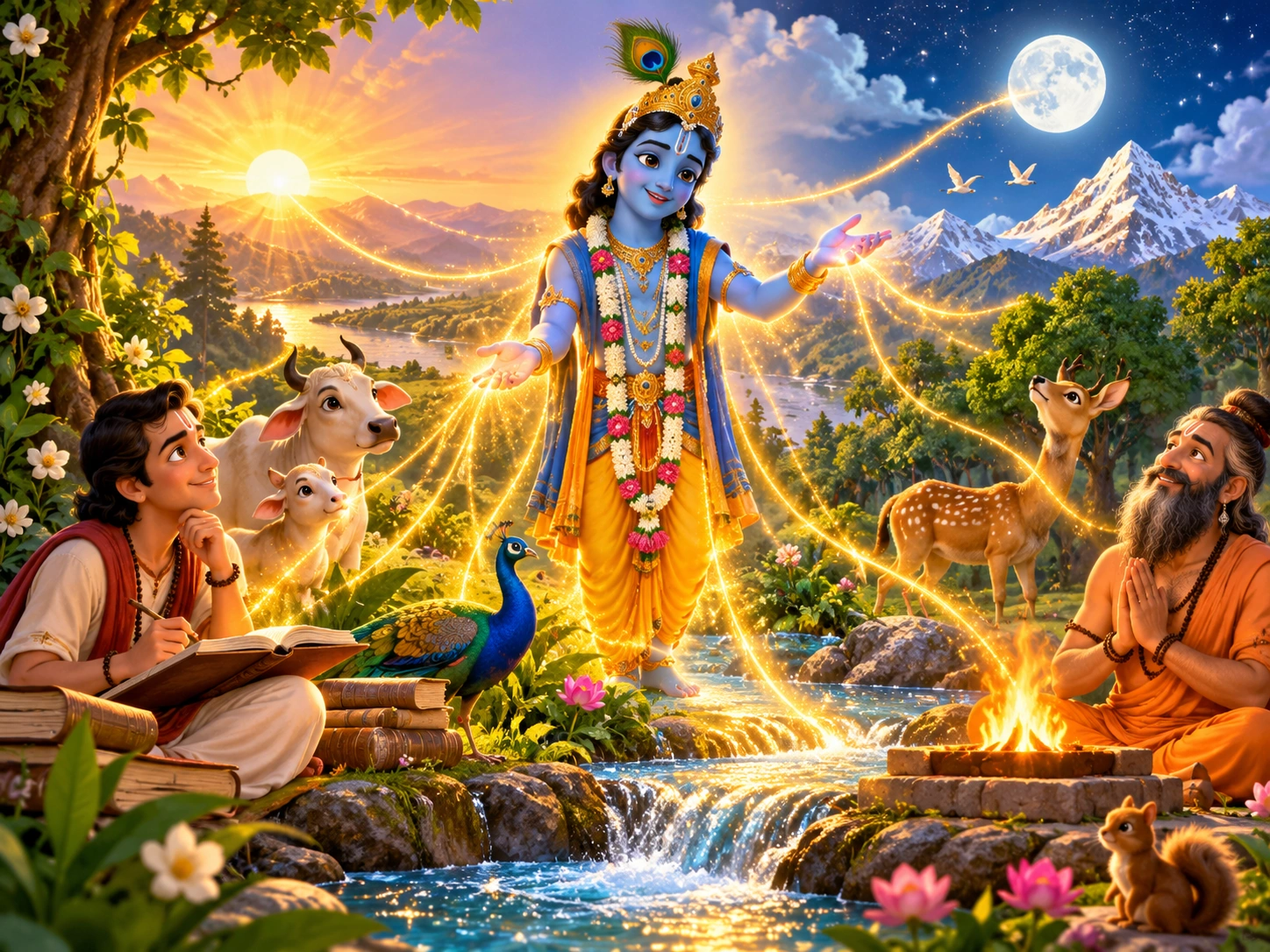
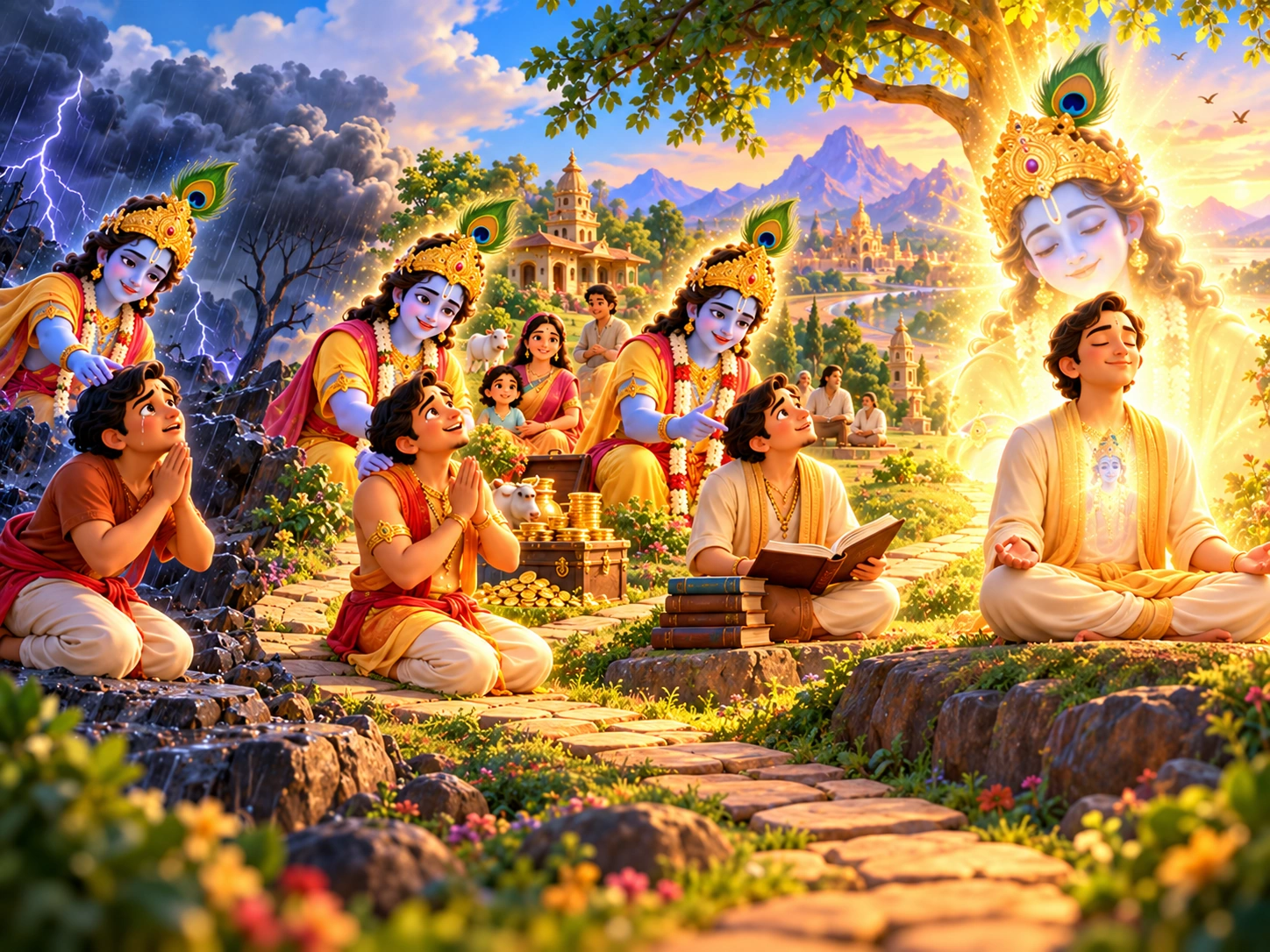
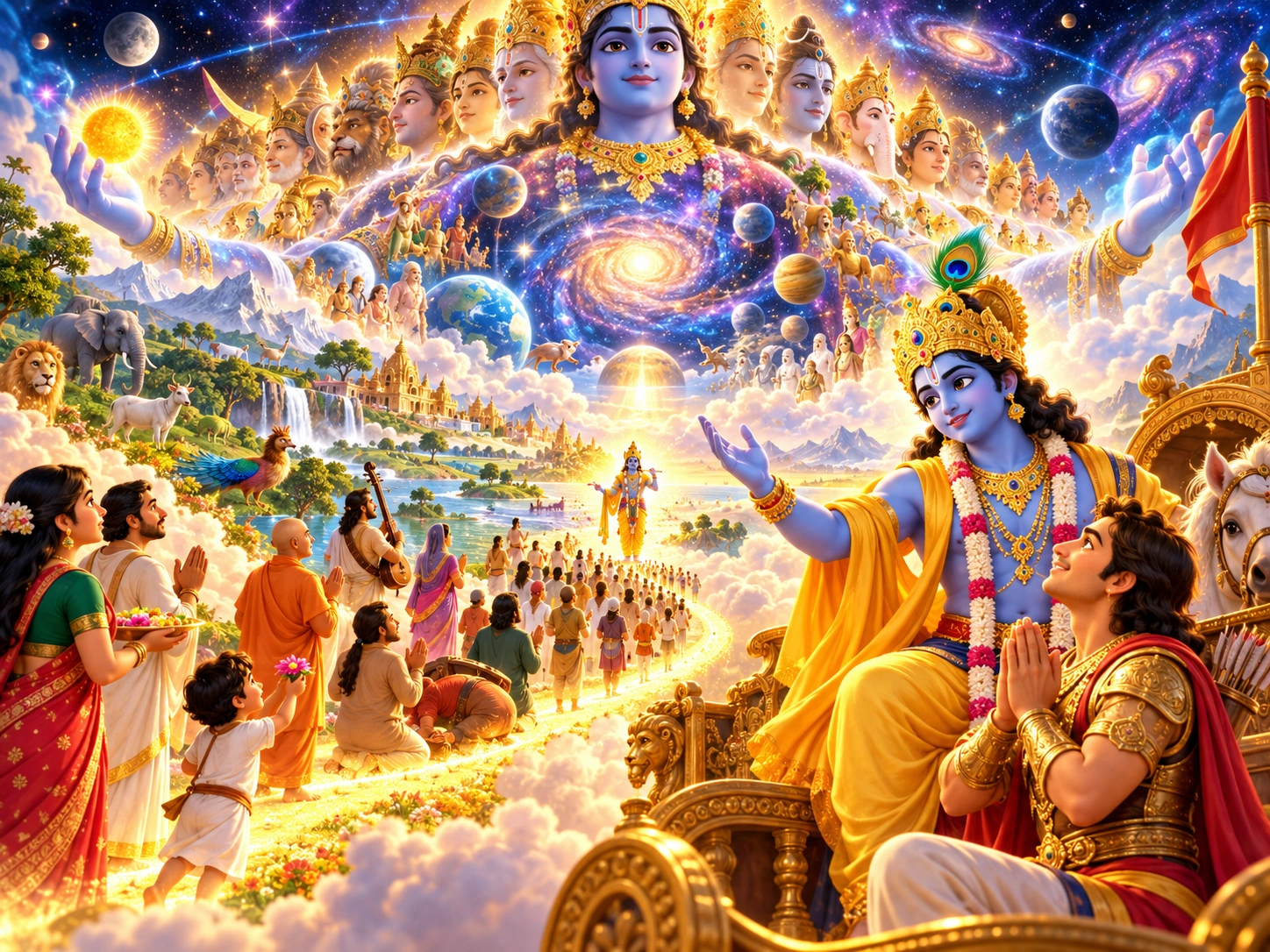
Krishna reveals his divine nature — he is the essence of all creation. He describes the four types of devotees who seek him and explains the nature of Maya (illusion) that veils the divine truth — from the Bhagavad Geeta.
Chapter 7 — Jnana Vijnana Yoga.
Jñāna-Vijñāna-Yogaḥ
Chapter Placement in the Bhagavad Gītā
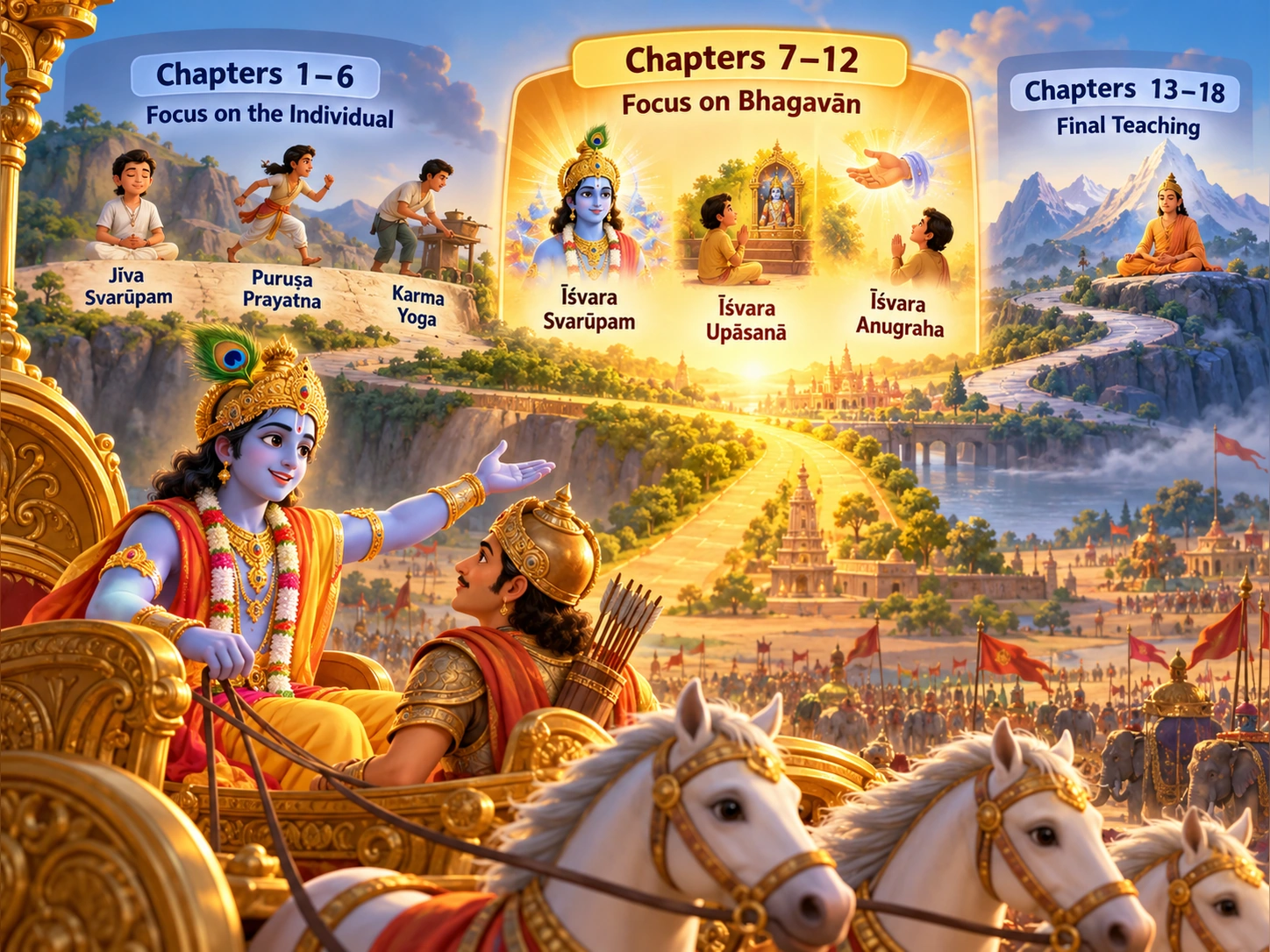
Chapter 7 is a major turning point in the Bhagavad Gītā. The eighteen chapters are broadly viewed as three groups of six—the prathama-ṣaṭkam, madhyama-ṣaṭkam, and carama-ṣaṭkam. Chapter 7 begins the madhyama-ṣaṭkam, covering Chapters 7 through 12.
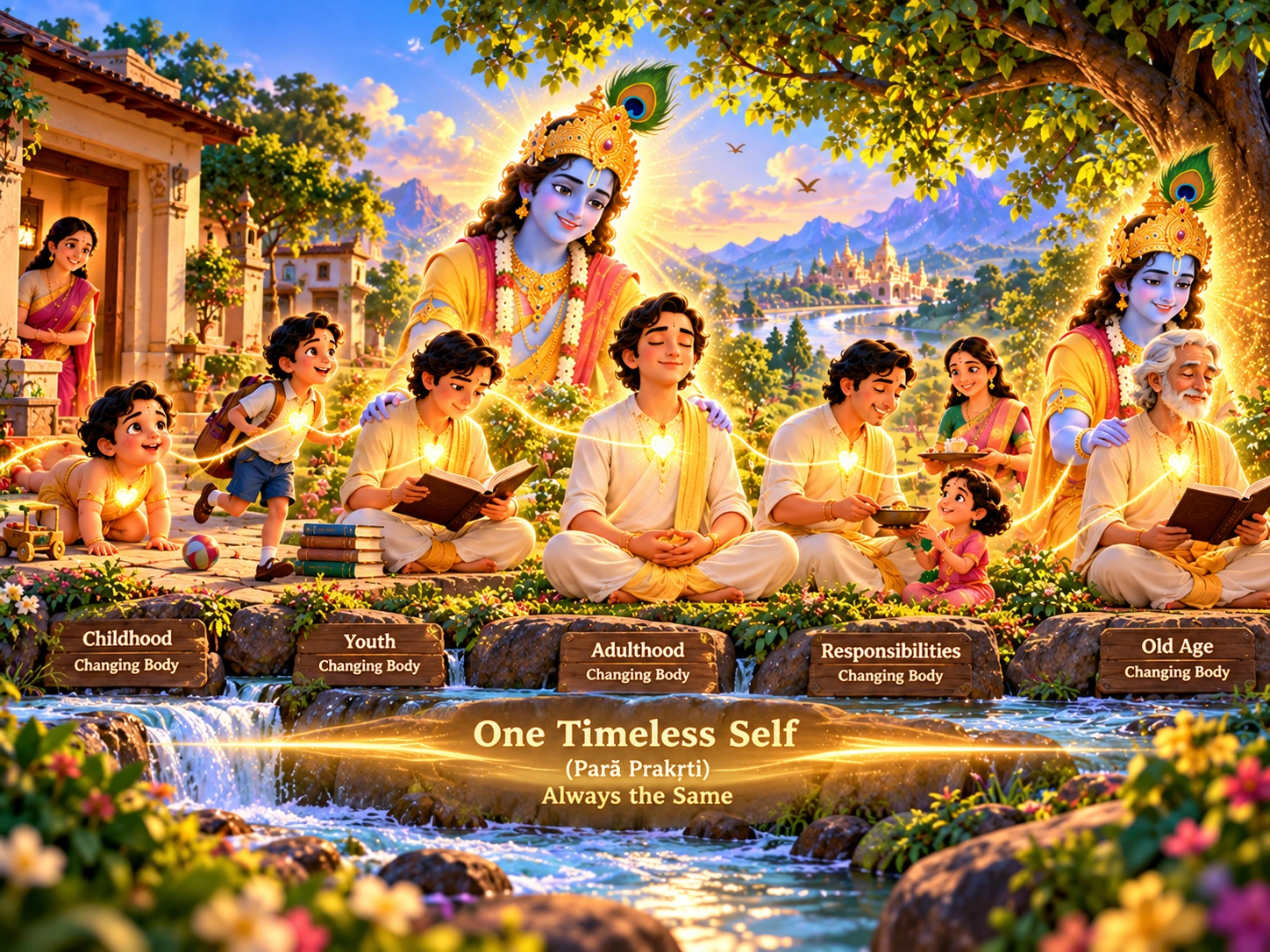
The first six chapters prominently developed three themes: jīva-svarūpam, the essential nature of the individual; puruṣa-prayatna, the importance of individual initiative and free will; and karma-yoga, the first major spiritual discipline. The jīva was shown not to be merely the changing body or mind, but essentially the changeless consciousness.
Beginning with Chapter 7, the emphasis shifts to three corresponding themes: Īśvara-svarūpam, the nature of Bhagavān; Īśvara-upāsanā, meditation and devotion directed toward Bhagavān; and Īśvara-anugraha, the indispensable role of divine grace in spiritual growth.
This shift does not cancel individual effort. The earlier emphasis on puruṣa-prayatna is now balanced by the recognition that spiritual growth is an uphill journey requiring both effort and grace. Confidence is necessary, but the idea that one can accomplish everything through individual effort alone is rejected.
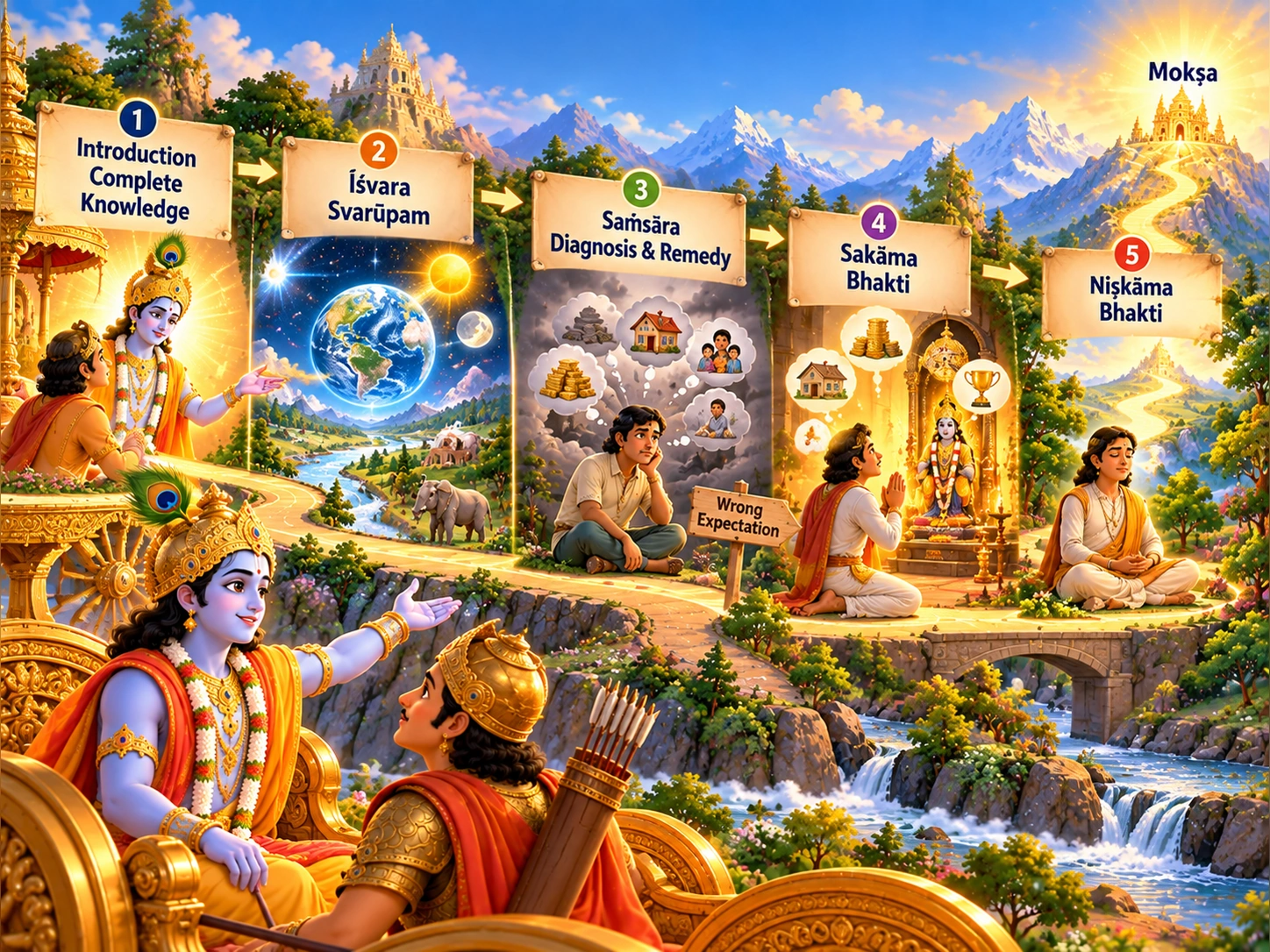
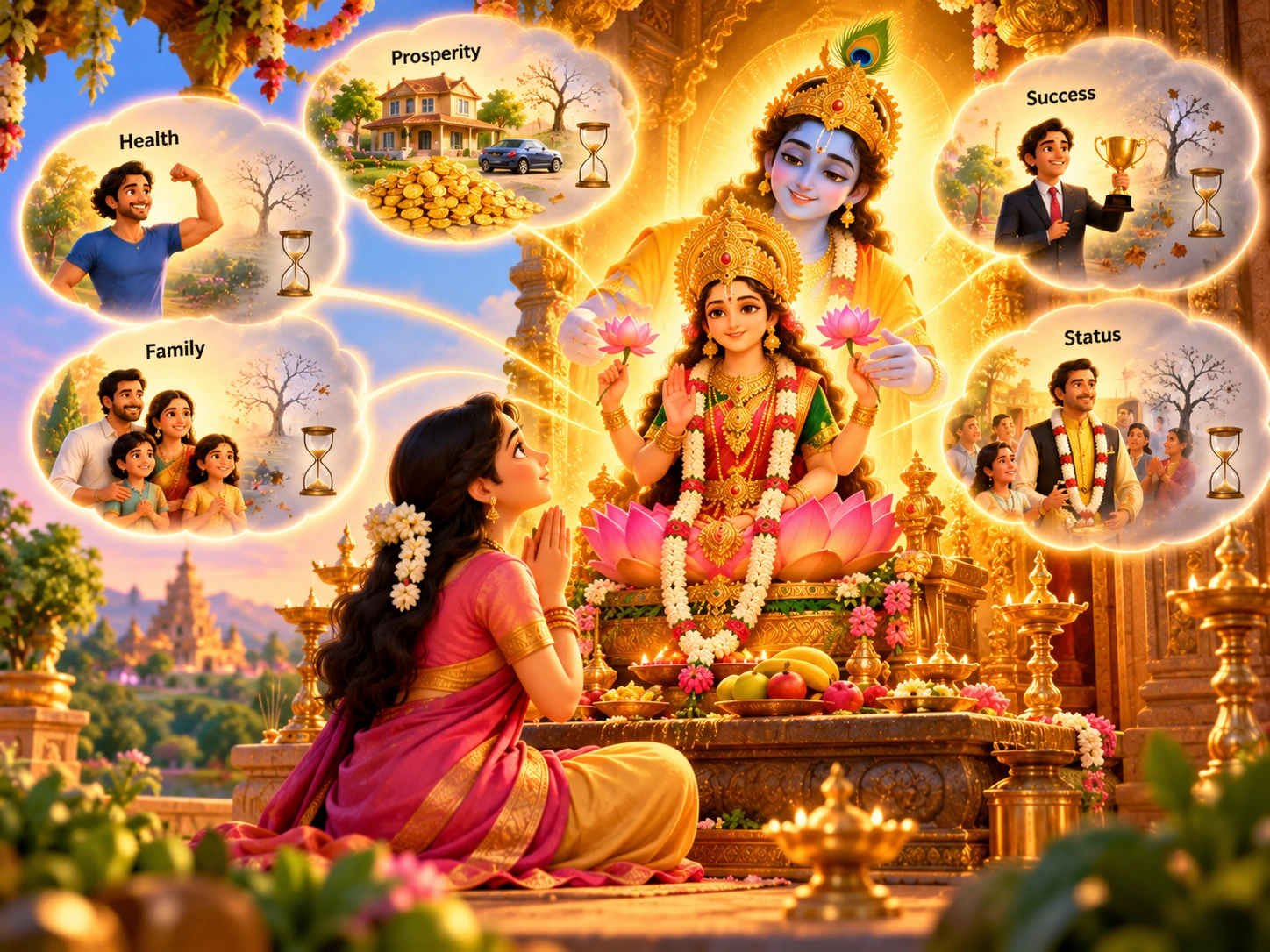
Chapter 7 is therefore both the opening chapter of the madhyama-ṣaṭkam and a compact presentation of the larger teaching that will unfold through Chapters 7 to 12. Its central concern is complete knowledge of Bhagavān, together with the growth of devotion from finite-result seeking to knowledge of the infinite.
Central Theme of the Chapter
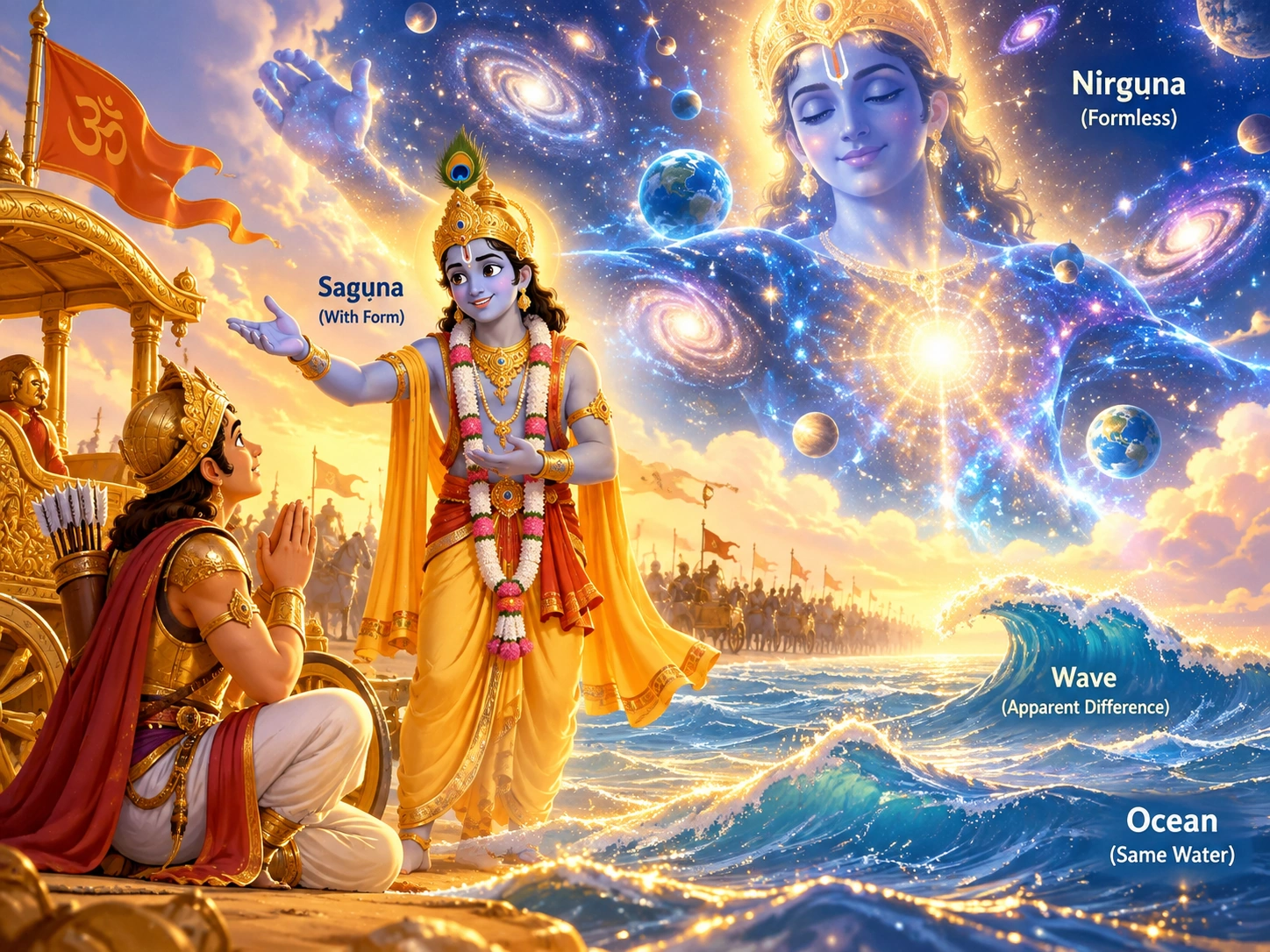
The chapter opens with Kṛṣṇa promising samagra-Īśvara-jñānam—complete knowledge of Bhagavān. Complete knowledge cannot stop with a particular divine form. Bhagavān must be understood in both the saguṇa and nirguṇa aspects, the formed and the formless, the finite appearing manifestation and the limitless reality.
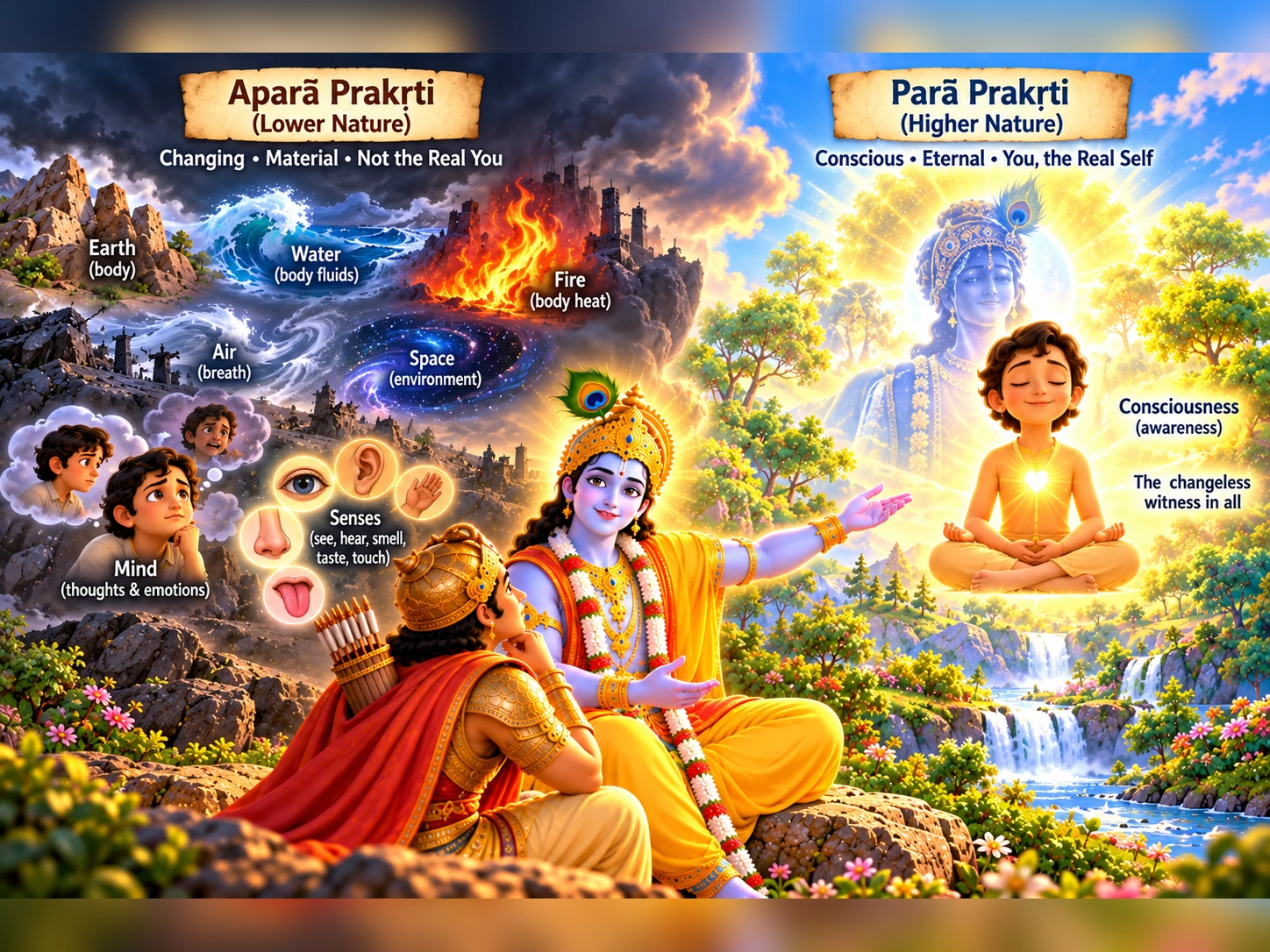
These two dimensions are introduced through the expressions jñānam and vijñānam. In this chapter, jñānam refers to knowledge of the lower, saguṇa nature of Bhagavān, while vijñānam refers to knowledge of the higher, nirguṇa nature. Thus the title Jñāna-Vijñāna-Yogaḥ points to comprehensive knowledge of Bhagavān.
At the saguṇa level there is difference: Bhagavān is worshipped as the divine and the devotee remains the worshipper. At the nirguṇa level, the essential distinction between jīva and Bhagavān disappears, just as wave and ocean appear different in name and form but are both nothing other than water in essence.